

 GIRIRAJ CIVIL DEVELOPERS LTD NSE
-
By @GirirajCivilDev
-
April 9, 2026
- 0 Comment
How Ancient Indian Architecture Still Influences Modern Engineering
Walk through any modern Indian city past a gleaming metro station, under a soaring flyover, or into a sustainably designed public building and you might not immediately think of the Brihadeeswarar Temple or the stepwells of Rajasthan. But look closer. The principles that guided those ancient builders are very much alive in the concrete and steel of today.
India’s architectural heritage is not a relic preserved behind museum glass. It is a living, breathing legacy that continues to shape how engineers think, design, and build. From passive cooling systems to earthquake-resistant foundations, the wisdom encoded in ancient Indian structures has found a renewed purpose in the modern world.
In this post, we explore exactly how and why it matters more than ever.
1. The Science Behind Ancient Structures
It is tempting to view ancient Indian architecture as purely artistic or spiritual in nature. But spend time studying these structures and a different picture emerges one of remarkable engineering intelligence.
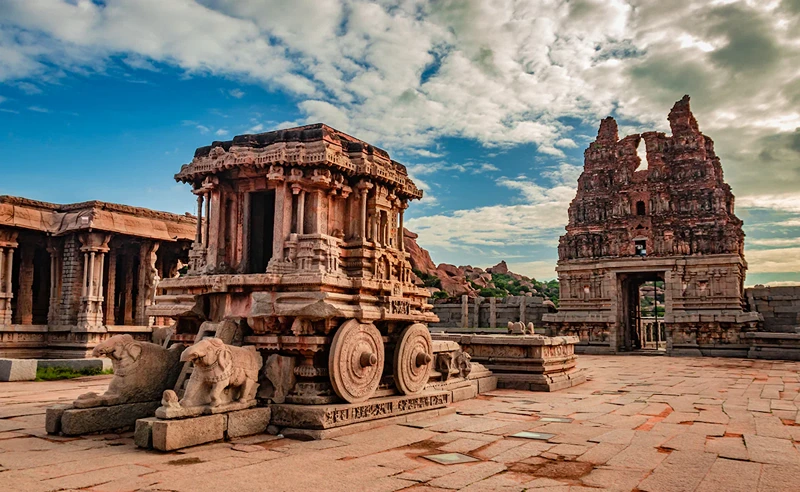
The Brihadeeswarar Temple in Thanjavur, built over a thousand years ago, stands as one of the most extraordinary examples. Its massive granite tower constructed without modern machinery demonstrates a deep understanding of load distribution and structural balance. The capstone alone weighs an estimated 80 tonnes. Yet the structure has endured centuries of seismic activity, monsoons, and the passage of time.
Modern structural engineers study these achievements not as curiosities, but as case studies in resilience. The interlocking stone systems used in ancient temples, for instance, mirror techniques now used in seismic-resistant architecture absorbing and redistributing forces rather than resisting them rigidly.
2. Passive Cooling — An Ancient Solution to a Modern Problem
One of the most pressing challenges facing modern construction in India is the extreme heat. As urban temperatures continue to rise, architects and engineers are under growing pressure to design buildings that stay cool without relying entirely on energy-intensive air conditioning.
The answer, it turns out, was worked out centuries ago.
Ancient Indian builders understood the behaviour of air and sunlight with extraordinary precision. Thick stone walls absorbed daytime heat and released it slowly at night. Jali screens the latticed stone windows found in Mughal and Rajput architecture allowed cross-ventilation while filtering harsh sunlight. Courtyards created natural convection currents, pulling cool air through the building.
Today, these principles are being actively incorporated into green building design. Modern architects are rediscovering the value of:
- Double-skin facades that regulate heat gain
- Perforated screens and shading devices inspired by jali work
- Central atrium designs that mimic the traditional courtyard system
- Thermal mass construction using locally sourced stone and brick
What was once intuitive knowledge passed down through generations of craftsmen is now being validated by modern climate science and integrated into cutting-edge sustainable design.
3. Water Management — The Stepwells Come Full Circle
If there is one area where ancient Indian engineering deserves far more credit than it receives, it is water management.
The stepwells or vav of Gujarat and Rajasthan are masterpieces of functional engineering. Structures like Rani ki Vav in Patan, a UNESCO World Heritage Site, descend deep into the earth through a series of terraced steps and galleries, providing access to groundwater year-round while managing fluctuating water levels with elegant simplicity.
But these were not just water sources. They were sophisticated groundwater recharge systems designed to replenish aquifers, reduce evaporation, and sustain communities through drought.
In a country now grappling with water scarcity, urban flooding, and collapsing groundwater tables, modern civil engineers are drawing directly from this ancient playbook. Rainwater harvesting systems, percolation tanks, and stepped retention ponds all echo the logic of the vav. Several municipalities across Rajasthan and Gujarat have even revived and restored their ancient stepwells as functional water management infrastructure not as historical monuments, but as working systems.
The lesson is simple: our ancestors solved problems that we are only now beginning to fully appreciate.
4. Urban Planning That Still Makes Sense
The excavations at Mohenjo-daro and Harappa reveal something astonishing: cities laid out in a grid pattern, with standardised brick dimensions, underground drainage systems, and separated residential and commercial zones. This was urban planning and it was being done over four thousand years ago.
Modern urban designers often speak of “smart cities” as if the concept were born in the digital age. But the Harappan civilisation was already thinking about organised streets, waste management, and public sanitation at a time when most of the world was far less systematically organised.
Today’s civil engineers and urban planners are revisiting these ideas in the context of India’s rapidly growing cities. The push for mixed-use zoning, pedestrian-friendly streets, integrated drainage, and green corridors all align with principles that governed Harappan city design millennia ago.
History, it seems, has a way of repeating itself — especially when the original ideas were simply ahead of their time.
5. Vastu Shastra and Structural Orientation
For a long time, Vastu Shastra was dismissed in technical circles as superstition. That dismissal is increasingly being reconsidered.
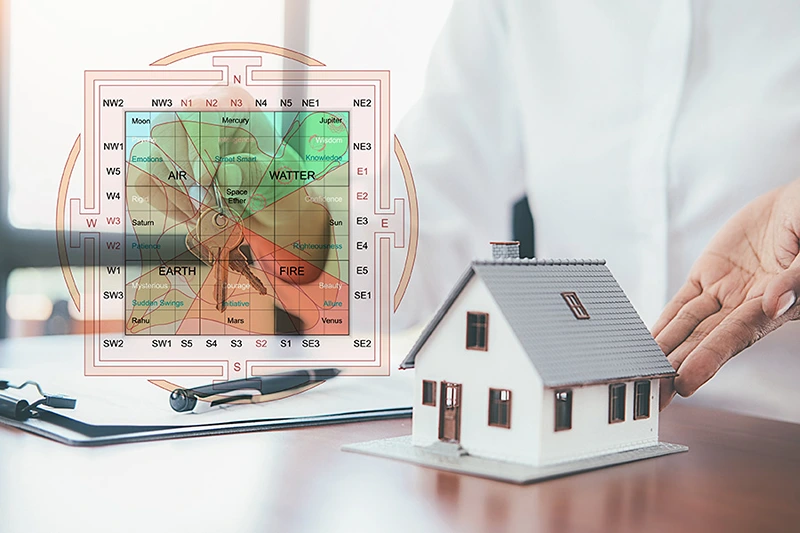
Strip away the metaphysical language and what you find is a codified system of architectural guidelines rooted in solar orientation, wind patterns, site topography, and material properties. Vastu’s preference for north-south alignment of structures, for instance, ensures that buildings receive optimal natural light and minimise heat exposure a principle fully consistent with modern energy-efficient design.
Several architecture schools and research institutions in India are now undertaking serious academic studies of Vastu Shastra, not to validate its spiritual claims, but to extract the engineering logic embedded within it. What is emerging is a recognition that ancient builders were doing empirical work observing, testing, and refining even without the formal frameworks of modern science.
6. Materials That Stood the Test of Time
One of the most compelling arguments for looking to ancient Indian architecture is the sheer durability of its materials and methods.
The lime mortar used in ancient Indian construction is far more durable than many modern equivalents. Buildings using this mortar have outlasted modern concrete structures by centuries. Lime is also breathable and self-healing micro-cracks re-seal as the material continues to carbonate over time. In contrast, modern Portland cement, while strong, is brittle and prone to cracking under seismic stress.
Modern researchers are now studying the chemistry of ancient Indian mortars to develop next-generation sustainable building materials. The goal? To combine the longevity and ecological footprint of traditional materials with the precision and scalability of modern manufacturing.
This is not nostalgia. It is intelligent engineering.
7. What This Means for Infrastructure Builders Today
For companies operating in civil and infrastructure construction today, the relevance of this ancient knowledge is not merely philosophical it is practical. From foundational earthworks and site preparation to the finishing of complex public structures, every stage of modern construction has something to learn from how ancient builders worked with the land rather than against it.
India is currently in the midst of one of the largest infrastructure build-outs in its history. As a railway station construction contractor or a railroad engineer working on modern transit hubs, the parallels with ancient design thinking are impossible to ignore. Road over bridges (ROB) and foot over bridges (FOB) are going up across the country, reshaping how people move through cities and across rail corridors. Urban residential and commercial projects are rising in cities large and small. In every one of these sectors, there is an opportunity to draw from the deep reservoir of Indian engineering knowledge.
The best infrastructure projects of the coming decades will be those that:
- Prioritise durability and long-term performance over short-term cost savings
- Integrate climate-responsive design principles into every structure
- Think holistically about how buildings and infrastructure interact with their environment
- Respect the land, the water, and the communities they serve
These are not new ideas. They are, in many ways, very old ones and they are more relevant today than ever.
Building on a Foundation That Was Never Broken
There is a quiet confidence in understanding where you come from. India’s engineering heritage is extraordinary and the fact that so much of it is only now being formally recognised and studied does not diminish its value. If anything, it makes the case for humility in how we approach construction.
Modern engineering tools are more powerful than anything available to ancient builders. But power without wisdom produces structures that crack, flood, overheat, and fail. Wisdom grounded in millennia of local observation, experimentation, and refinement that is a foundation worth building on.
The ancient builders of India did not just shape stone. They shaped an approach to construction that was deeply respectful of materials, climate, people, and time. That approach is precisely what India’s infrastructure needs as it scales up to meet the demands of the 21st century.
Are You Building India's Future?

At GIRIRAJ Civil Developers Limited, we believe that great construction is always about more than concrete and steel. It is about understanding the land you build on, the community you build for, and the legacy you leave behind.
Whether it’s railway infrastructure, road over bridges (ROB), foot over bridges (FOB), or large-scale civil projects as a trusted civil works contractor and one of the top construction companies in Mumbai, we bring quality, commitment, and a deep respect for Indian engineering tradition to every project we undertake.