

 GIRIRAJ CIVIL DEVELOPERS LTD NSE
-
By @GirirajCivilDev
-
May 21, 2026
- 0 Comment
Why Modular Construction is the Future of Urban Projects in India
Indian cities are building fast. Metro lines, elevated roads, transit hubs, commercial towers. The pace has picked up considerably over the last decade. But speed alone is not the point. The real question is whether the construction methods we rely on can actually keep up with urban demand without compromising quality or safety.
That is where modular construction is starting to make a real difference. More top construction companies in Mumbai and other major urban centres are integrating modular approaches into large-scale projects, not as an experiment, but as a serious alternative to conventional methods.
What Is Modular Construction?
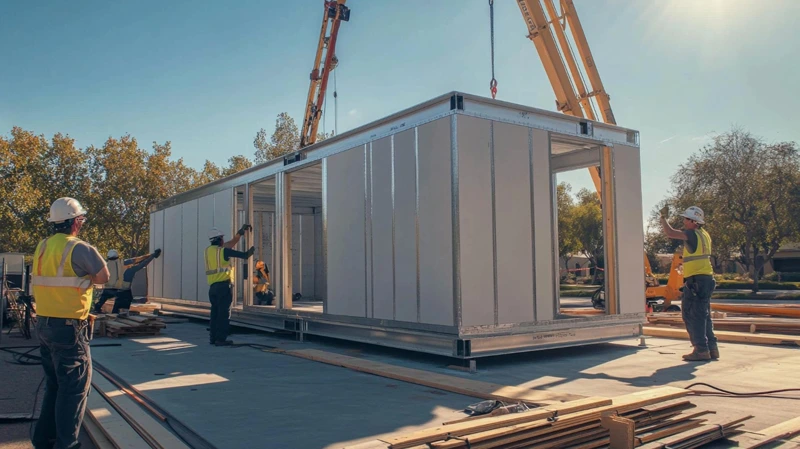
Modular construction means building sections or components of a structure off-site, in a controlled factory or yard environment, and then assembling them at the actual project location. Instead of doing everything on-site from scratch, large portions of the work are done elsewhere and transported ready to install.
It is not a new concept globally, but in the Indian context it is gaining serious traction, especially for projects that involve:
- Tight urban sites with limited working space
- Active rail corridors or road networks that cannot be shut down for long
- Repetitive structural elements like platforms, decks, or panels
- Aggressive delivery timelines set by government contracts
Why Modular Construction Makes Sense for Indian Urban Projects
1. Speed Without Cutting Corners
The biggest draw is time. When fabrication happens off-site in parallel with site preparation and earthworks, the overall project timeline compresses significantly. A civil works contractor working on a station building or an elevated structure can have prefabricated components ready to install the moment the foundation work is done.
That kind of parallel workflow is very hard to achieve with purely conventional construction.
2. Better Quality Control
Factory conditions are more controlled than a construction site. Concrete mix ratios, steel reinforcement placement, curing times. All of these are easier to monitor and maintain when you are working in a yard rather than under the open sky in monsoon season.
For structural elements that carry heavy loads, like segments of a road over bridge (ROB) or a railway bridge deck, this quality consistency matters a lot. A well-fabricated component is more reliable than one made under unpredictable field conditions.
3. Less Disruption to Existing Infrastructure
This is probably the most underappreciated advantage in an Indian urban context. A lot of infrastructure work in cities happens right next to live roads, active rail lines, and busy commercial areas. You simply cannot afford to close things down for months.
Modular elements can be lifted and installed during planned traffic blocks or maintenance windows. A railroad engineer coordinating an ROB installation over an active railway line knows exactly how valuable a short installation window is. Pre-built segments make that window usable.
The same logic applies to a foot over bridge (FOB) at a busy station. Instead of constructing it beam by beam over several weeks while commuters navigate around scaffolding, modular components can go up quickly and with less chaos.
4. Safer Worksites
Fewer workers on-site for extended periods means fewer opportunities for accidents. A significant portion of the high-risk work, welding, reinforcement, formwork, happens in a controlled yard setting. The on-site crew handles assembly and connections, which is still skilled and careful work, but the overall risk profile is lower.
For any railway station construction contractor working near active tracks, reducing on-site exposure time is a meaningful safety improvement.
5. Reduced Waste and Material Costs
Where Modular Works Best in Urban Infrastructure
Not every project is a natural fit. Modular construction delivers the most value where:
- Structures have repetitive elements, like platform canopies, bridge segments, or wall panels
- Site access is constrained and working space is limited
- Projects cross or run alongside active rail or road networks
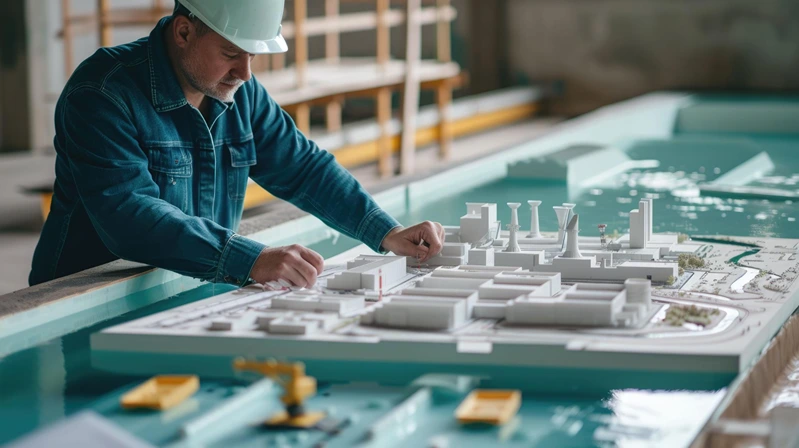
- Pre-building engineering has been done thoroughly: soil tests, utility mapping, load analysis, so installation can proceed without surprises
Pre-building engineering is worth highlighting here. One reason modular projects fail is that the site preparation was not done properly before the components arrived. If the foundation work is off by even a small margin, prefabricated sections do not align correctly, and the time savings disappear in costly corrections.
Good pre-building engineering is what makes modular construction actually work on the ground.
The Challenges That Are Still Being Worked Out
Modular construction in India is growing, but it is not without friction. Transport logistics for large prefabricated elements can be complicated in dense urban areas. Getting an oversized segment through city traffic at night requires careful coordination with local authorities.
The ecosystem of fabrication yards, skilled erection teams, and quality-certified manufacturers is still developing in India compared to more mature markets. Top construction companies in Mumbai and other cities are building this capacity, but it takes time.
Design also needs to account for modular assembly from the start. A project that is designed conventionally and then retrofitted to be modular does not capture the full benefit. The decision needs to happen early, during the design and pre-building engineering phase.
What This Means for Infrastructure Contractors
For any experienced civil works contractor, modular construction is not a replacement for expertise. It requires more of it. You need to understand connections, tolerances, erection sequences, and how prefabricated elements interact with in-situ work.
Companies that are investing in this capability now are positioning themselves well. As Indian cities continue to densify and project timelines get tighter, the ability to deliver faster without compromising structural integrity will be a real differentiator.
Whether it is an earthworks package clearing the way for a new transit depot, a series of ROB spans over a busy freight corridor, or a complete station building delivered ahead of schedule, the underlying principle is the same: plan well, build smart, and do not let the method limit the outcome.
Final Thoughts
Modular construction is not a shortcut. Done properly, it is actually more demanding in terms of planning, engineering coordination, and quality control. But the results, faster delivery, less disruption, better safety, and consistent quality, make it worth the investment in getting it right.
Indian urban infrastructure has a lot of ground to cover. Modular construction is one of the more practical ways to cover it without cutting corners.
At Giriraj Civil Developers Limited (GIRIRAJ), every infrastructure project is approached with a focus on engineering excellence, durability, and safety. With expertise in civil engineering, bridge construction, and large-scale infrastructure development, GIRIRAJ delivers projects built to last. By using advanced construction practices and maintaining strict quality standards, GIRIRAJ is committed to building strong, reliable, and future-ready infrastructure.