

 GIRIRAJ CIVIL DEVELOPERS LTD NSE
-
By @GirirajCivilDev
-
May 12, 2026
- 0 Comment
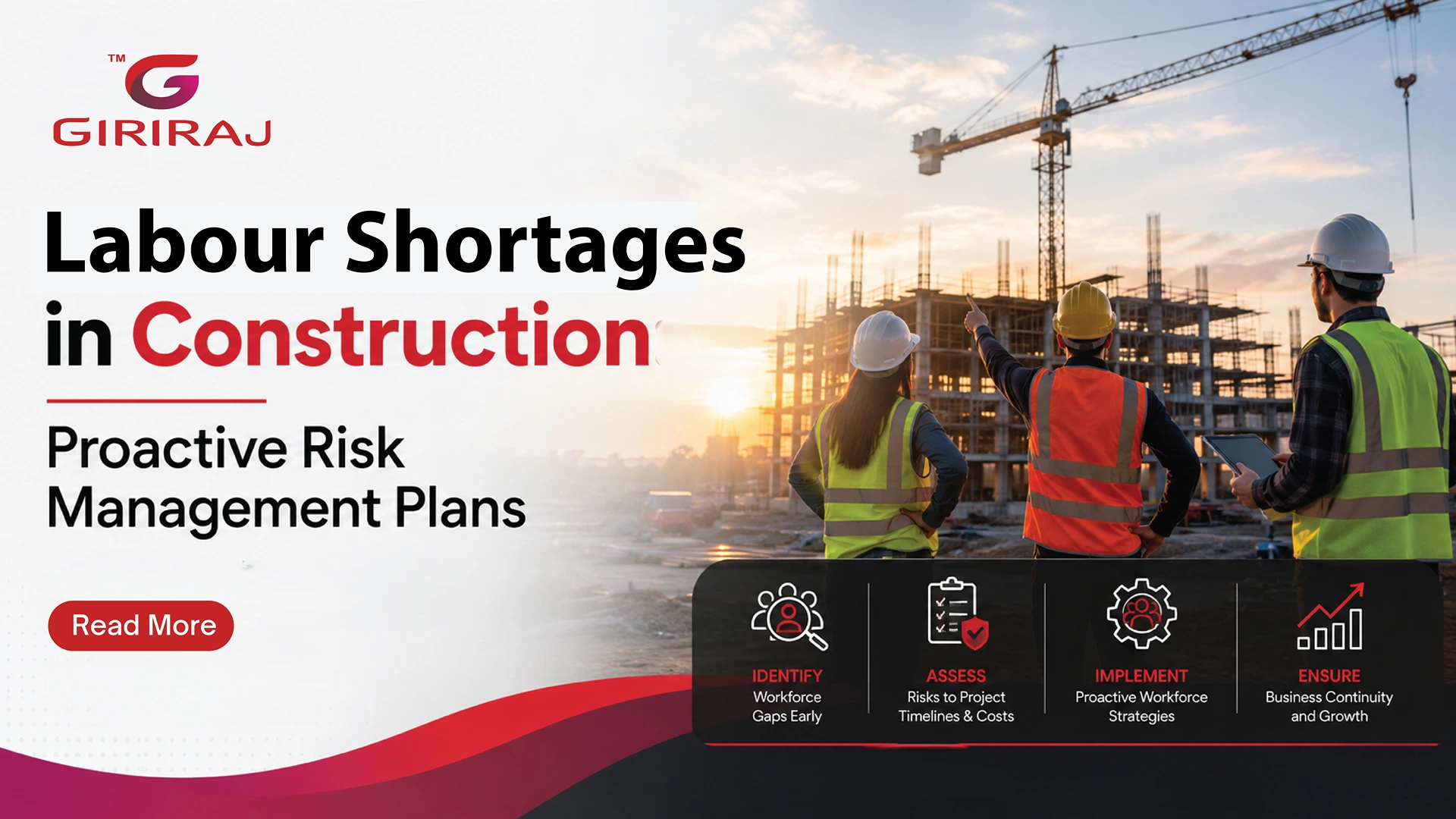
Labour Shortages in Construction: Proactive Risk Management Plans
India’s construction sector needs roughly 2 million more skilled workers than it currently has. That number comes from NAREDCO, and it’s not a projection. It’s the gap right now, in 2025, while the industry is simultaneously growing at 15% year-on-year and sitting on one of the largest infrastructure pipelines the country has ever seen.
Think about what that means on a live project. You’ve got sanctions, budgets, and timelines all lined up. And then execution stalls because there simply aren’t enough trained hands on site. Not because of bad planning in the traditional sense. Because the labour market itself has a structural hole in it.
This is the reality for civil contractors across India right now. And the ones still delivering projects on time aren’t doing it by luck. They’re doing it because they stopped treating workforce availability as someone else’s problem and started building it into their risk management from day one.
1. The Reality on Site Right Now
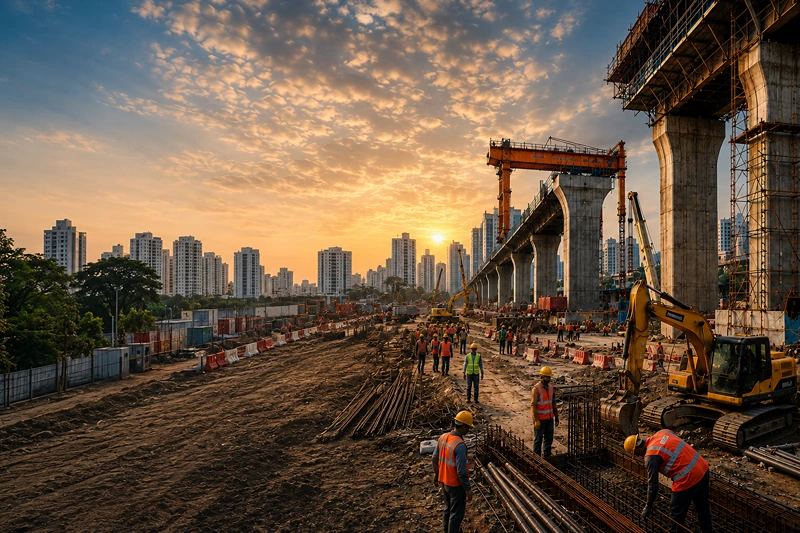
India’s infrastructure boom is real. Railway projects, urban transit corridors, new highway stretches, station redevelopments. The pipeline is full. But the labour market hasn’t scaled to match it. There’s simply more work than there are trained hands to do it.
For a civil works contractor, this creates a pressure point that didn’t exist in the same way five years ago. Back then, if a crew was short, you’d find replacements in a week or two. Now? You might be waiting a month for a trained welder or a licensed equipment operator. And if you’re mid-project, that wait doesn’t come cheap.
The demand for specialized skills in infrastructure has gone up faster than the supply of people trained to do that work. That gap is the problem.
2. Why This Is Happening
A few things have converged at the same time.
Government investment in infrastructure has gone up significantly. The budgets are there, the projects are sanctioned, and execution is underway. Top construction companies in Mumbai and other metro cities are juggling multiple large projects simultaneously. That stretches their workforce thin.
- Skilled workers who retired or left the sector during the COVID years haven’t all come back.
- Younger workers are harder to retain. They have more options across industries now.
- Technically specialized roles like railroad engineering, earthworks supervision, and structural work on bridges require training that takes time.
- Geographic spread of projects means you can’t always pull workers from nearby sites.
None of these are problems you can solve quickly. Which is exactly why the solution has to start early.
3. What Happens When You Don't Plan for It
Most contractors know what labour shortages feel like when they hit mid-project. Work stalls. Deadlines slip. You end up paying premium rates for last-minute contractors or temporary workers who don’t know the site. Quality control becomes harder because supervision is spread too thin.
For projects involving a road over bridge (ROB) or a foot over bridge (FOB) near active rail corridors, stoppages aren’t just a scheduling headache. They come with safety implications, coordination requirements with railway authorities, and contractual penalty clauses. You don’t get to just pause and resume.
Railway station construction, in particular, operates on extremely tight possession windows. These are brief scheduled periods when rail traffic is halted and work can happen on live infrastructure. If your crew isn’t there, at full strength, at the right time, that window closes. And the next one might be weeks away.
4. Proactive Risk Management: What It Actually Looks Like
Managing labor risk proactively doesn’t mean having a backup list of phone numbers. It means building it into your project planning from day one.
Labor forecasting tied to the project schedule
Before the first pile goes in, you should know exactly what skills you need at each phase and when. Earthworks at the start will need a different crew than structural work in the middle or finishing work at the end. Map it out. Gaps become visible before they become emergencies.
Long-term subcontractor relationships
The best infrastructure contractors don’t go hunting for subcontractors project by project. They build long-term partnerships with reliable subcontractors who know how they work, what standards they hold, and what their projects demand. That relationship means priority when labor is tight.
On-site training programs
Some companies have started investing in skilling workers directly. It takes time upfront, but it builds a more reliable internal bench. Workers trained on your methods, your standards, and your safety protocols don’t need to be replaced every project.

5. Pre-Building Engineering as a Buffer
One area that doesn’t get talked about enough is pre-building engineering. Strong pre-construction planning, detailed design, material scheduling, sequencing, reduces the number of decisions that need to be made in the middle of execution.
When your drawings are solid and your sequencing is thought through, a smaller crew can still make progress without everything grinding to a halt because someone needs to wait for a decision or a clarification. Pre-building engineering essentially buys you flexibility during execution.
This is especially relevant in earthworks, where site conditions can change and decisions need to be made fast. A project team that has already worked through the possible scenarios in the engineering phase will respond faster and waste less time.
6. Specialized Work Needs Specialized Planning
Not all construction labour is interchangeable. A general labourer and a trained railroad engineer are not solving the same problems. When it comes to railway infrastructure specifically, the specialization requirements are significant.
Track laying, bridge work, FOB and ROB construction near live tracks, station building. All of these have specific safety and technical requirements that not every worker is qualified for. You can’t just pull in extra hands from a general contractor pool and expect things to go smoothly.
A railway station construction contractor working under Railway Board norms has to field workers who are familiar with those standards. That’s not something you improvise. And that’s exactly why workforce planning in this sector requires more lead time than most.
The same logic applies to ROB and FOB projects built over active railway lines. The margin for error during construction is very small. Skilled, experienced workers who’ve done this before are not a luxury. They’re a necessity.
7. How the Best Contractors Are Handling It
Here’s something worth saying plainly. The top construction companies in Mumbai and elsewhere that are consistently delivering railway and civil projects on schedule are not doing something dramatically different. They’re just doing the basics earlier than everyone else.
Workforce planning starts at the bidding stage for them. Not after the contract is signed. Not after mobilization begins. They’re already thinking about crew availability, subcontractor capacity, and regional labour pools before they’ve even submitted the tender. By the time the project kicks off, the people side of the plan is already in motion.
They also don’t go hunting for subcontractors from scratch each time. They’ve built relationships over years with people they trust. When a project comes up, one call is usually enough. That kind of network takes time to build, but once it’s there, it’s one of the most valuable things a civil works contractor can have.
Retention is another thing they take seriously. Experienced workers don’t just show up. They stay because the work is stable, the pay reflects their skill, and there’s some sense of where they’re headed. Contractors who treat workers as interchangeable end up rebuilding their teams on every project. The ones who invest in people carry that knowledge forward.
And they budget for uncertainty. Contingency labour costs are in the plan from day one. So when something shifts mid-project, it doesn’t blow up the whole financial model. It’s absorbed. That’s the difference between a disruption and a crisis.

8. Final Thoughts
The 2 million worker deficit in India’s construction sector is not going to fix itself in the next quarter. The infrastructure work isn’t slowing down either. So the gap between what the industry needs and what the labour market can supply is something every contractor has to work around, not wait out.
The good news is that this is a solvable problem at the project level. Not by any one contractor fixing the whole industry, but by treating workforce availability as a real risk, mapping it early, and building the relationships and systems that reduce your exposure to it.
At Giriraj Civil Developers Limited, workforce planning is part of how we approach every project from the start. From pre-building engineering through earthworks, FOB and ROB construction, and full railway station delivery, the people on the ground are not an afterthought. They’re the plan.
If you’re looking for a railway station construction contractor or civil works partner that shows up prepared, not scrambling, reach out to us. That’s the kind of work we do.