

 GIRIRAJ CIVIL DEVELOPERS LTD NSE

-
By @GirirajCivilDev
-
May 16, 2026
- 0 Comment
Scaling Lessons from Hyderabad’s IT Infrastructure Boom
Hyderabad built infrastructure before the demand showed up. That one decision is why the city became India’s IT capital. Everything else followed from it. Top construction companies in Mumbai and across India are still drawing lessons from what Hyderabad got right and in some cases, what it got wrong.
1. The City Built Before the Demand Arrived
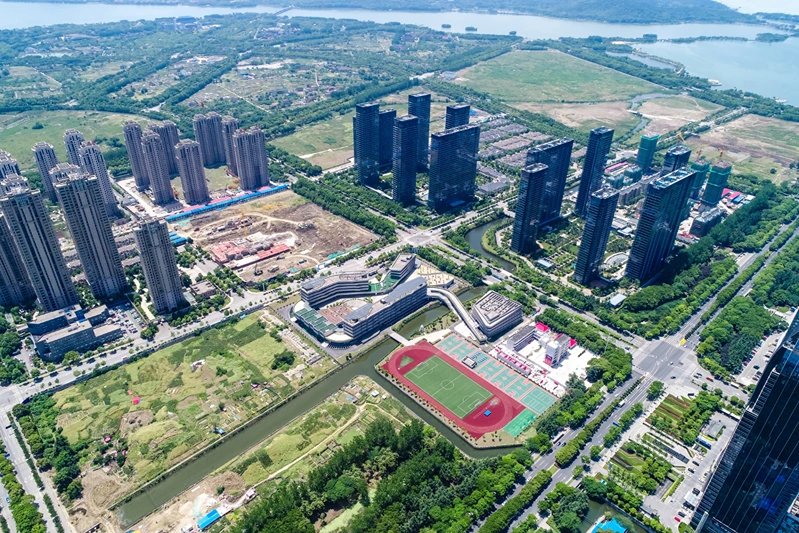
Most Indian cities wait for demand to show up before laying down infrastructure. Hyderabad did the opposite, at least in some phases. HITEC City came up when the IT sector was still finding its feet in India. Roads, power lines, water supply, the whole lot was set up in anticipation.
That is a bold call for any civil works contractor or government body to make. You are essentially spending money on infrastructure for tenants who do not exist yet. But it paid off. When companies started looking for space in India post-2000, Hyderabad had the answer ready.
The lesson here is not complicated: if you want large-scale industry to come in, you have to de-risk the location first. Infrastructure is that de-risking.
2. Pre-Building Engineering Was Not an Afterthought
Here is something that does not get talked about enough in the context of Hyderabad’s growth: the quality of pre-building engineering that went into the development. Before a single slab was poured, there were surveys, soil studies, load assessments, utility planning.
Pre-building engineering is exactly the kind of work that gets ignored when timelines are tight and pressure is high. But Hyderabad’s experience proves that skipping it costs more in the long run. Projects that rushed through planning ended up with drainage failures, poor road connectivity, and buildings that could not be expanded as tenant needs grew.
The ones that got it right? They are still standing, still occupied, still generating value.
3. Connectivity Was the Real Product
The IT buildings themselves were secondary. What companies actually paid for was access. Access to airports, to residential zones, to other companies in the cluster. Hyderabad understood early that a tech park surrounded by bad roads is just an expensive building.
This is where structures like road over bridge (ROB) projects became critical. When rail lines cut through the city’s expansion zones, you cannot let at-grade crossings choke movement. An ROB lets traffic flow without disrupting rail operations. Hyderabad built several of these at key junctions, and it showed.
A foot over bridge (FOB) serving a busy transit node might look minor on paper, but it moves thousands of workers safely every day. Both are underrated pieces of urban infrastructure that Hyderabad deployed well. Any railroad engineer who has worked on these projects knows how much planning goes into getting the geometry right, especially when you are crossing active tracks.
4. Earthworks Set the Foundation — Literally
The Deccan Plateau terrain around Hyderabad is not always friendly. Rocky patches, uneven gradients, and seasonal drainage issues meant that extensive earthworks were needed before many development zones could even be considered buildable.
This is the unglamorous part of infrastructure. Nobody puts earthworks in a press release. But if that work is sloppy, everything built on top of it is compromised. Settlement issues, waterlogging, structural cracking they all trace back to inadequate site preparation.
Experienced civil works contractors who worked in Hyderabad’s expansion corridors will tell you that getting the earthworks right took real effort and real expertise. It is not something you outsource to the lowest bidder and hope for the best.

5. Railway Station Construction Shaped Worker Mobility
As Hyderabad’s IT workforce grew, the pressure on commute infrastructure became enormous. This is where investment in railway station construction and upgrades made a tangible difference. Better stations with improved platforms, covered walkways, and organized entry-exit points meant that tens of thousands of workers could move through them daily without chaos.
A railway station construction contractor working on these upgrades is not just building a pretty facade. They are solving a flow problem. How do you move 50,000 people through a station in the morning peak without bottlenecks? The answer involves platform widths, staircase placement, signage, and coordination with rail operations — all at once.
Hyderabad’s Secunderabad and Kacheguda stations underwent significant improvements through this period. They are not perfect, but the intent was right.
6. What Mumbai Can Take From This
Mumbai’s situation is different, obviously. It is a far older city with layers of infrastructure from different eras piled on top of each other. The greenfield approach Hyderabad used is simply not available here.
But the principles hold. Top construction companies in Mumbai are increasingly working on infrastructure that needs to integrate with existing rail networks, existing road grids, existing utilities. The challenge is additive rather than blank-slate, but the core thinking is the same: plan thoroughly, build for future load, do not cut corners on earthworks or pre-building engineering.
Mumbai’s suburban rail network is one of the most intensively used in the world. Every ROB, every FOB, every station upgrade that happens around it needs to be executed with that pressure in mind. The engineering tolerance is low. The consequences of getting it wrong are felt by millions of daily commuters.
7. The Role of Specialized Contractors
One thing Hyderabad’s experience demonstrated is that generalist construction is not enough for complex urban infrastructure. You need specialists. A civil works contractor who understands railway proximity, utility conflicts, and traffic management simultaneously is a different animal from someone who builds residential towers.
The same is increasingly true in Mumbai. Infrastructure projects around the rail network, whether it is a new road over bridge, a station upgrade, or an earthworks project clearing the way for new development, require contractors who have done this before and understand the constraints.
Experience is not a marketing claim in this context. It is a functional requirement. A railroad engineer who has coordinated with railway authorities, managed traffic blocks, and delivered a structure within a few centimeters of tolerance knows things you cannot learn on the job for the first time.

Final Thoughts
Hyderabad’s IT infrastructure story is really a civil engineering story. The code and the companies came later. What made the city ready was ground preparation, connectivity planning, transit investment, and the willingness to build before the demand was certain.
That is the lesson worth taking. Not the specific projects, but the mindset. Build for what you want the city to become, not just what it is today.
For companies working in this space, whether in Mumbai or elsewhere across India, that mindset is the actual competitive advantage. The technical capability matters. But so does the discipline to do the planning work properly before anything is poured.
At Giriraj Civil Developers Limited (GIRIRAJ), with expertise in civil engineering, bridge construction, and large-scale infrastructure development, GIRIRAJ focuses on delivering projects that combine engineering excellence, durability, and safety. By using advanced construction practices and maintaining strict quality standards, GIRIRAJ is committed to building strong, reliable, and future-ready infrastructure.