

 GIRIRAJ CIVIL DEVELOPERS LTD NSE
-
By @GirirajCivilDev
-
August 11, 2026
- 0 Comment
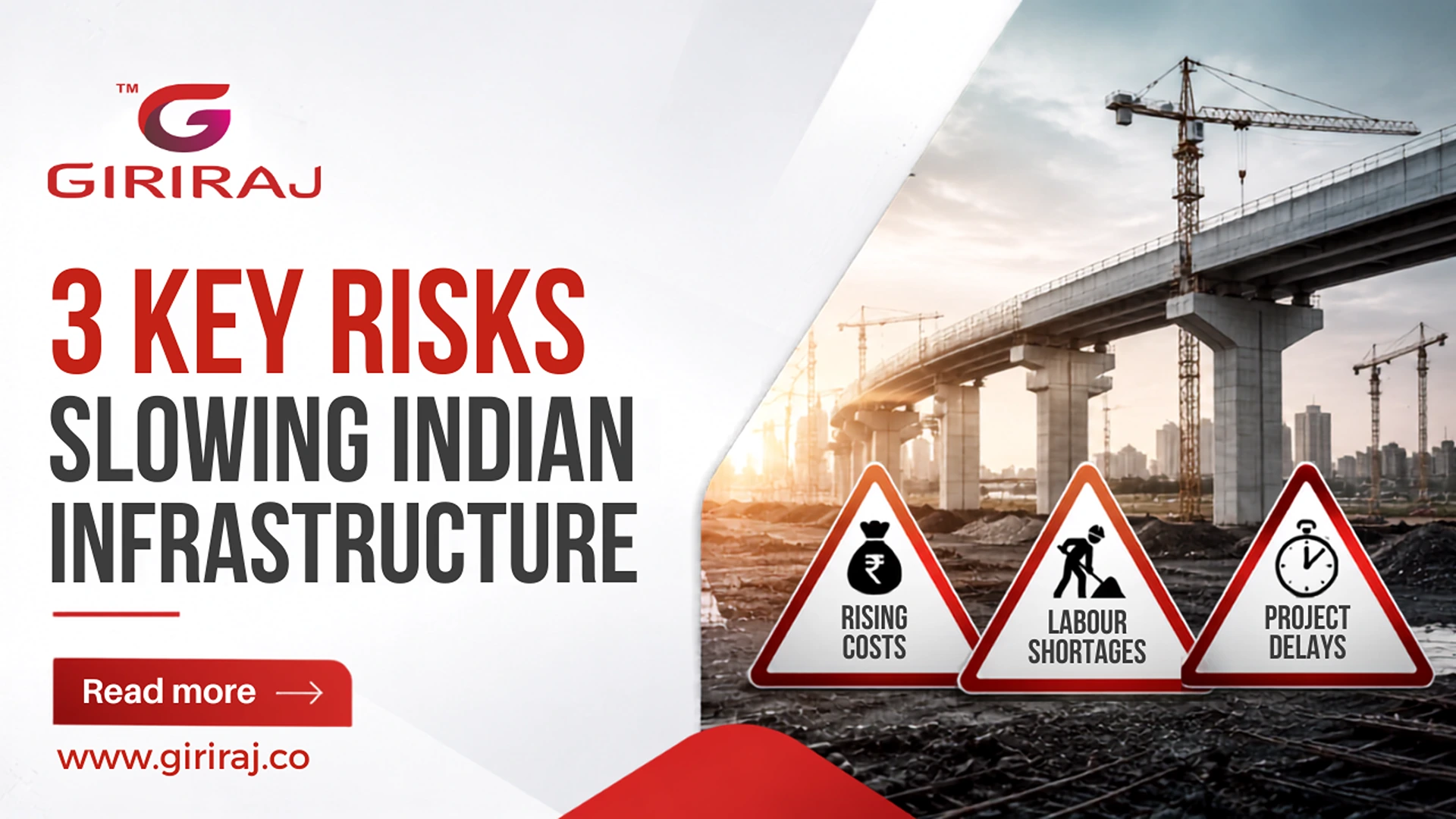
Labour Shortages, Land Delays, Price Swings: The Three Risks Still Slowing Down Indian Infrastructure
India’s infrastructure development may seem impressive when looking at the big figures like, how many new national highway stretches laid or rail corridors added or metro lines in the cities that did not have them five years ago. That kind of picture is quite convincing.The problem is that if you look more closely at how the construction processes unfold from mobilizing the site of construction and preparing it to finally delivering the product to the customer you would notice it is not a straightforward affair at all. Beneath the growth figures, the same set of risks resurfaces on nearly every project, regardless of state or scale.
Labour, land, and material prices. None of these risks are new, and none require much explaining. What is worth examining is why they continue to affect timelines even now, when funding and design approvals move faster than ever. The gap between recognising a risk and managing it on a live project is where a large share of Indian infrastructure delays actually originate.
The Labour Problem Nobody Wants to Say Out Loud
Every civil works contractor has a version of this story. A skilled mason or a rebar crew that was on site last month is gone this month, off to another project two states away that’s paying a little more. It’s not disloyalty, it’s just how the market works right now. Skilled labour is scarce, and the guys who know what they’re doing can afford to move around.
A few things are driving this:
- Migration patterns shifted hard after the pandemic, and a lot of workers who went back to their villages never fully came back to the cities
- Younger workers are choosing gig work and factory jobs over construction sites, where the hours are long and the work is physical
- Real training pipelines for skilled trades, like formwork, welding, and finishing, are still thin compared to demand
The result is that projects budget for a crew size and then spend the first few weeks of every phase scrambling to actually get that crew. It adds weeks to timelines that nobody planned for on paper.
When the Land Isn't Ready, Nothing Else Matters
You can have the funding sorted, the design approved, the contractor mobilized, and none of it matters if the land itself isn’t cleared and handed over. This is probably the single biggest reason Indian infrastructure projects run late. Not bad engineering. Not bad contractors. Land.
Acquisition in India runs through a maze of state processes, court challenges, and compensation disputes that can drag on for years. A railway line or a highway stretch might be 90 percent funded and fully designed, and still sit waiting because one stretch of land hasn’t been handed over cleanly. Projects like a road over bridge (ROB) or a foot over bridge (FOB) tend to feel this the hardest, since they usually need right-of-way from both the road authority and the railway at the same time, which means twice the approvals and twice the room for something to stall.
A few patterns show up again and again:
- Farmers and landowners contesting compensation rates, which is fair, but it stalls handover
- Encroachments that take months of legal process to clear before a single foundation can be dug
- Rehabilitation and resettlement obligations that projects are legally bound to but rarely budget enough time for
None of this is new. It’s been a known issue for decades. What’s changed is that with the sheer volume of projects now running at once, even small land delays on individual sites add up to a real drag on the national timeline.

Steel One Month, Cement the Next
Material prices in construction don’t move gently. They spike. A contractor might quote a project based on steel and cement rates in January, and by the time procurement actually happens six months later, those same materials cost 15 or 20 percent more. That gap comes straight out of margins, or worse, out of the quality decisions made on site.
Global steel prices, fuel costs, and domestic cement demand all play into this, and a lot of it is outside any single company’s control. What contractors can control is how much of that risk they absorb versus how much gets built into contracts up front.
Some of the more common price shocks come from:
- Steel and cement, which together make up a huge share of any structural project’s material cost
- Diesel and fuel prices, which affect everything from excavators running earthworks to the trucks hauling material to site
- Import dependency on certain specialized equipment and components, where currency swings add another layer of unpredictability
Fixed-price contracts signed without escalation clauses are especially exposed here. A project that looked profitable at the bid stage can end up barely breaking even, purely because of what happened to commodity prices in the months between bid and build.
What This Actually Means for Project Timelines
Put these three together and you start to see why even well-funded, well-designed projects still slip. Labour shortages slow down execution once work has started. Land delays stop work from starting in the first place. Price swings eat into the budget that was supposed to carry the project through to completion. Any one of these can push a timeline out by months. All three at once, which happens more often than people admit, and a project that was supposed to take two years can easily stretch to three or four.
This isn’t a reason to be pessimistic about Indian infrastructure. The pace of construction really has picked up, and the intent behind most of these projects is solid. It’s just worth being honest about where the friction actually comes from, instead of treating every delay as a one-off surprise.
So What Can Be Done About It
There’s no single fix, but there are things that genuinely help:
- Building realistic contingency into timelines for land handover, instead of assuming best-case dates
- Investing in skill development programs that create a steadier pipeline of trained workers, not just recruiting from the same shrinking pool
- Using price escalation clauses in contracts so that material volatility doesn’t sit entirely on one party
- Better coordination between state land departments and project authorities, so acquisition doesn’t become the bottleneck it usually is
None of this is glamorous. It’s the boring, procedural stuff that rarely makes headlines. But it’s exactly the kind of thing that separates projects that finish on schedule from the ones that quietly slip year after year.
Conclusion
India’s infrastructure story is a genuinely good one, and the growth is real. But the risks that slow it down aren’t hiding anywhere, they’re the same three that have been around for years: getting enough skilled hands on site, getting land cleared and handed over on time, and managing what happens when material prices move without warning. The civil works contractors and top construction companies in Mumbai and other metros that plan around these risks, instead of getting surprised by them project after project, are the ones that end up delivering on time and keeping their reputation intact.