

 GIRIRAJ CIVIL DEVELOPERS LTD NSE
-
By @GirirajCivilDev
-
September 8, 2026
- 0 Comment
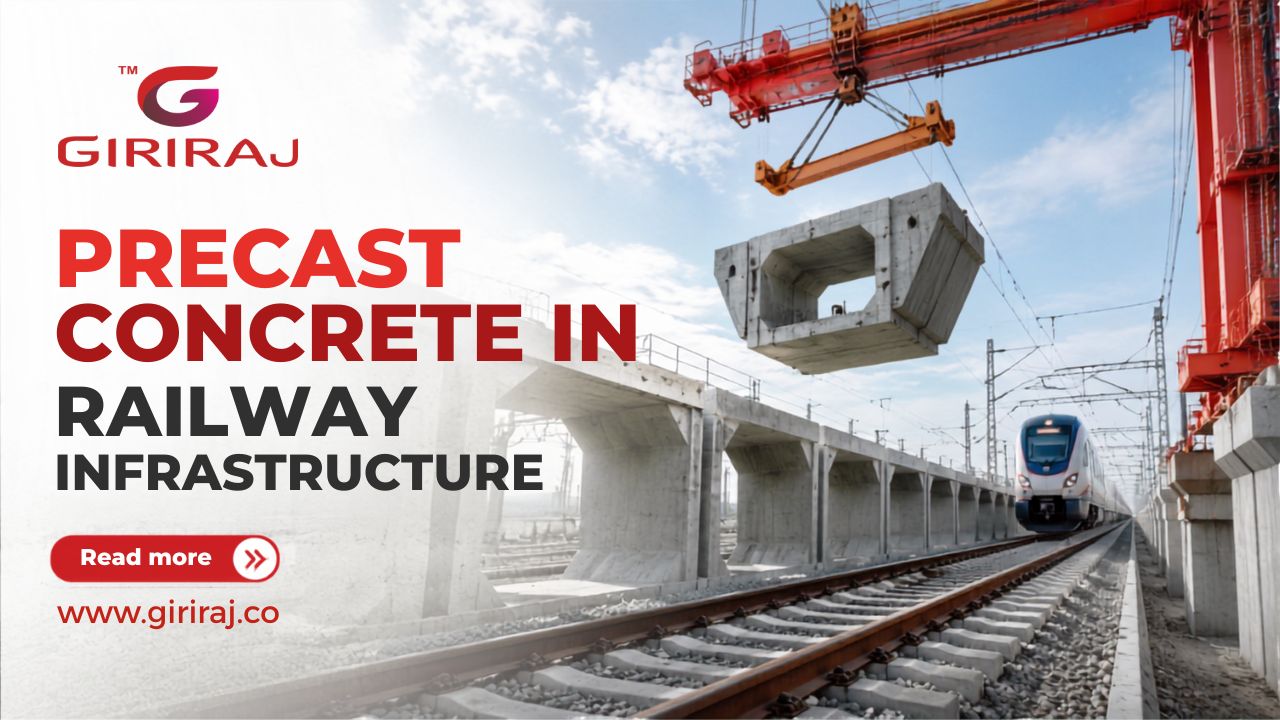
Precast Concrete in Railway Infrastructure: Faster Construction and Better Quality Control
Indian Railways and related infrastructure programmes require stations, Road Over Bridges (ROBs), Foot Over Bridges (FOBs), platform extensions, drainage systems, yards, and car sheds to be delivered while train operations continue. In these conditions, access is restricted and traffic or power possessions may be limited.
Precast concrete can help by moving a substantial part of casting, curing, and quality-control work away from the live railway work zone. It is not a universal replacement for cast-in-situ construction, but it can be effective where the elements are repetitive, the design is suitable, and transport and lifting can be planned properly.
Why Precast Can Help Railway Projects
- Casting and curing can take place away from the live track or congested work area.
- Reusable moulds and controlled production can improve repeatability for standardised elements.
- Site activity can focus on lifting, positioning, fixing, joint treatment, and inspection.
- The method can reduce some repetitive formwork and wet concrete work during short possessions.
- Production planning can be less exposed to site weather, although transport and installation remain weather-sensitive.
The actual programme, quality, safety, and cost benefit depends on the approved design, element type, casting location, transport route, lifting equipment, site access, connection details, and railway possession arrangements.
What Is Precast Concrete?
Precast concrete elements are manufactured away from their final position under controlled production conditions. Depending on the design and specification, they may be reinforced or prestressed, cured using an approved process, tested, inspected, transported, and installed at the project site.
- Production takes place in a casting yard or controlled facility.
- Reinforcement, prestressing, moulds, concrete placement, vibration, and curing follow an approved quality plan.
- Dimensional checks and concrete tests are performed before dispatch where required.
- The element is transported, lifted, aligned, connected, grouted, or fixed at the final location according to the approved method statement.
Precast does not eliminate quality control or curing. It shifts much of that activity away from the final work location and makes it easier to organise under controlled conditions.
Where Precast Can Be Used in Railway Projects
1. Platform Slabs and Coping Units
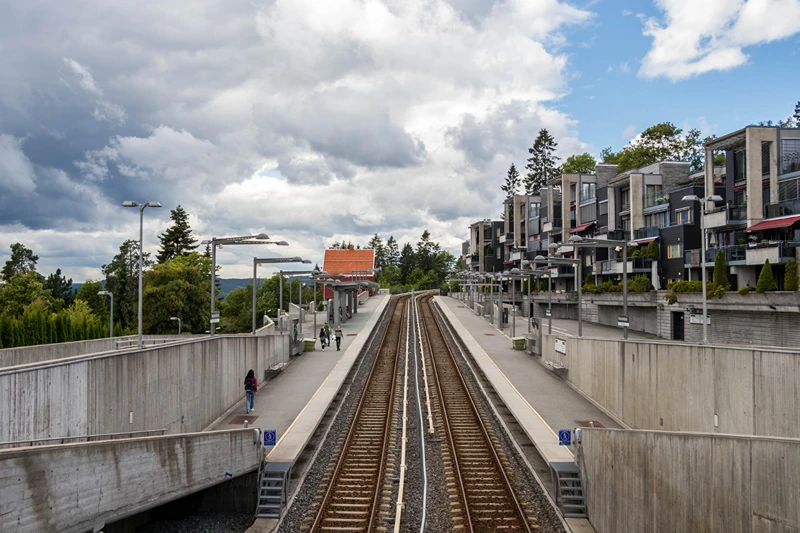
Platform works often take place in short traffic and power blocks. Precast slabs and coping units can be manufactured and cured before entering the work zone, reducing wet concrete operations during the possession.
On-site work still includes survey, bedding, lifting, alignment, joints, drainage interfaces, accessibility requirements, edge details, and inspection. The programme benefit should be stated only after considering the site layout and approved installation sequence.
2. Girders for ROBs, FOBs, and Bridges
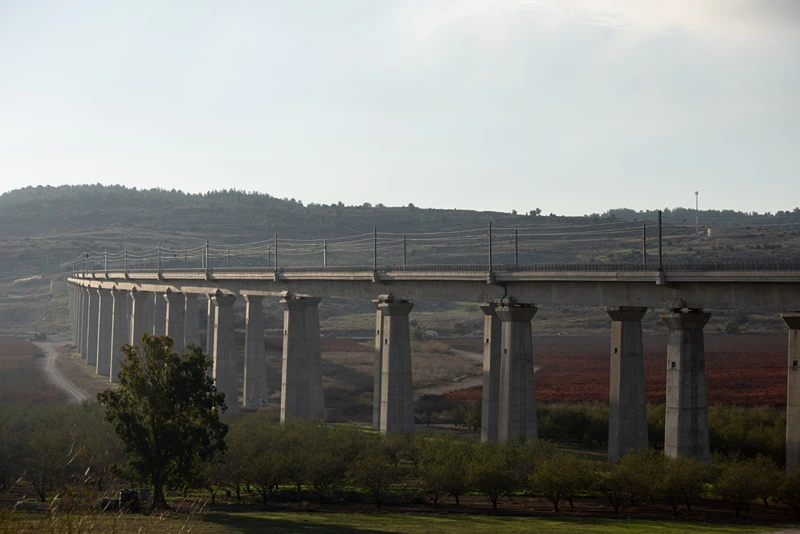
Precast or prestressed girders can shift repetitive production away from the railway corridor and reduce site formwork. Their use requires approved structural design, load and handling checks, lifting points, transport planning, bearings, temporary stability, erection equipment, and connection details.
Controlled production may improve dimensional consistency and quality control, but a precast girder is not necessarily stronger than a cast-in-situ alternative. Performance depends on design, materials, reinforcement or prestressing, curing, testing, handling, and installation.
3. Cable Trenches and Utility Ducts
Cable trenches, covers, and utility ducts often involve repetitive work along the alignment. Standardised precast sections can reduce repetitive site formwork, casting, and finishing.
Modular sections create interfaces between units. Joint sealing, alignment, drainage, cable access, cover seating, and protection from water ingress should therefore be included in the design and inspection plan.
4. Retaining Walls and Boundary Structures
Precast panels and modular wall components can reduce on-site shuttering and wet work where access is suitable. They still require foundation preparation, drainage, soil and stability checks, lifting arrangements, temporary bracing, and connection detailing.
The method may reduce on-site disturbance, but it does not remove the need to manage excavation, foundations, interfaces, and safe work near the railway.
5. Car Sheds, Yards, Drainage, and Repetitive Components
Car sheds, railway yards, station redevelopment works, and track-side drainage may contain repeated components that are suitable for controlled production. Examples can include trench covers, drainage units, slabs, coping elements, kerbs, and other approved components.
Suitability should be assessed component by component. Irregular geometry, difficult access, low repetition, heavy transport requirements, or complex connections may make cast-in-situ construction more practical.
Benefits of Precast Concrete
Improved Repeatability and Quality Control
Controlled production can improve repeatability because batching, moulds, reinforcement, vibration, curing, and testing are managed through a defined quality plan. This advantage is realised only when the approved mix, tolerances, testing, storage, transport, and installation procedures are followed.
Reduced Wet Work During Possessions
Precast can reduce the amount of casting and curing that must be carried out in the railway work zone. The available possession can then be used mainly for lifting, positioning, fixing, grouting, joint treatment, testing, and related protection arrangements.
Precast does not automatically reduce the possession required. The actual block or possession duration depends on the element size, access, crane or launching arrangement, installation sequence, safety requirements, and railway approval.
More Weather-Resilient Production Planning
Casting can often continue under covered or controlled conditions during adverse weather. However, transport, storage, lifting, site access, foundations, flooding, wind, and installation may still be affected by weather and ground conditions.
Potential Programme and Cost Benefits
Precast may reduce site labour, repetitive formwork, rework, material wastage, and wet-work time in the railway corridor. It is not always cheaper because casting-yard setup, moulds, transport, storage, cranes, handling, joints, and installation can add cost.
A project-specific comparison should consider both direct and indirect costs.
|
Cost factor |
Potential effect of precast |
|
Site labour and formwork |
May reduce repetitive site work. |
|
Rework and quality variation |
May reduce when the approved quality plan is followed. |
|
Casting yard and moulds |
Creates upfront cost and space requirements. |
|
Transport and storage |
Can be significant for large, heavy, remote, or congested sites. |
|
Cranes and erection |
Requires access, equipment, lifting studies, and a safe erection sequence. |
|
Possession and disruption |
May reduce wet-work time, but lifting and fixing still require planning. |
|
Joints and repairs |
Must be designed, executed, sealed, and maintained properly. |
Railway Standards, Drawings, and Approvals
Railway precast components are not approved merely because they are factory-made. Design, manufacture, testing, lifting, transport, installation, and acceptance must follow the project contract, approved drawings, applicable Indian Railway and RDSO specifications, relevant structural standards, testing plans, and railway safety and possession procedures.
RDSO publishes specifications and drawings for several precast and prestressed railway components. Its published material includes IRS:T-39-2021 for pretensioned prestressed concrete sleepers and Bridges & Structures drawings for precast prestressed concrete slabs under different spans and loading conditions. These references support a specification-led approach, but they do not mean that every precast application is approved for every project.
The contractor, designer, supplier, and railway authority should confirm the applicable drawing, material grade, reinforcement or prestressing details, tolerances, test requirements, lifting points, storage conditions, and acceptance criteria before production begins.
Challenges and Project-Selection Criteria
- Transporting large elements to remote, congested, or access-constrained sites can be difficult.
- Joint design and connection details must achieve the required structural and durability performance.
- A casting yard requires land, utilities, moulds, equipment, quality systems, and upfront investment.
- Crane capacity, lifting routes, storage, and temporary works must be planned before casting.
- Skilled operators and erection crews may not be available in every region.
- Low repetition or highly irregular components may not justify a precast solution.
- Railway possessions, protection arrangements, and approvals remain mandatory.
Precast is most suitable when the design is repeatable, production volumes justify the setup, access allows safe transport and lifting, and the project team can coordinate off-site production with on-site installation.
What’s Next for Precast in Railway Construction
Station redevelopment, ROB and FOB construction, dedicated freight corridors, yards, drainage, and other rail-infrastructure programmes may create demand for faster and more controlled construction methods. Precast can support these objectives where its design, logistics, quality, and approval requirements are addressed at the planning stage.
The contractors best placed to use precast effectively will be those that can integrate design review, casting-yard controls, transport, lifting, railway possessions, testing, and site installation into one coordinated execution plan.
Conclusion
Precast concrete is not a replacement for every construction method on a railway site. It can be a dependable option for platform components, girders, trenches, drainage, yards, and boundary or retaining structures when the elements are suitable for standardised production and the logistics are well planned.
The strongest case for precast is not simply that it is made in a factory. It is that the project can move repetitive production away from a constrained railway work zone while maintaining approved design, testing, safety, and installation controls.
Giriraj Civil Developers Limited works as a civil works contractor and railway station construction contractor on rail infrastructure projects across the country.The work includes railway station buildings, Road Over Bridges (ROB), Foot Over Bridges (FOB), car sheds and railway yards, track laying and fitting, earthworks, and railway bridges. It’s this range that has made Giriraj one of the top construction companies in Mumbai for railway infrastructure work.
Frequently Asked Questions
Q. What is precast concrete in railway construction?
A- Precast concrete elements are manufactured, cured, inspected, and tested away from their final position before being transported and installed on a railway project. Examples include platform components, trench covers, drainage units, bridge components, and other approved structural or civil elements.
Q. Why can precast help railway projects?
A- It can shift repetitive casting, curing, and some quality-control activities away from the live railway work zone. The programme benefit depends on design approval, logistics, lifting, connections, access, and the available possession window.
Q. Does precast always cost less than cast-in-situ work?
A- No. Precast may reduce site labour, formwork, rework, and possession-related costs, but casting-yard setup, moulds, transport, storage, cranes, joints, and installation can increase costs. A project-specific comparison is required.
Q. What railway elements can be precast?
A- Depending on the approved design and project specification, examples may include platform slabs, coping units, girders for ROBs and FOBs, cable-trench covers, drainage units, and boundary or retaining-wall components.
Q. Is precast concrete as strong as cast-in-situ concrete?
A- It can achieve the required design strength when properly designed, manufactured, cured, tested, transported, and installed. Precast is not automatically stronger; performance depends on the element design, materials, quality control, handling, and connections.
Disclaimer: This article is for general information only and is not engineering, legal, safety, or procurement advice. Railway construction must follow the project contract, approved drawings, applicable Indian Railway/RDSO requirements, relevant standards, and instructions of the competent railway authority. Project-specific design and method statements should be reviewed and approved by qualified professionals before execution.