

 GIRIRAJ CIVIL DEVELOPERS LTD NSE
-
By @GirirajCivilDev
-
August 24, 2026
- 0 Comment
Brownfield Builds Are Harder Than They Look,The Real Challenges of Redeveloping a Live Railway Station
Railway station redevelopment gets talked about mostly in terms of outcomes, a new facade, modern platforms, better passenger amenities. What tends to get left out is how different this work is from a standard build. On a greenfield site, you get an open plot and a sequence that mostly holds. On a live station, you’re rebuilding a working piece of infrastructure while thousands of people move through it every day, and that changes almost everything about how the project runs.
This isn’t a small distinction. It shapes planning, safety, and execution in ways that rarely show up in a scope document. Contractors have to work inside railway operating windows, coordinate with departments that each have their own priorities, and deal with site conditions that frequently don’t match what’s on record.
What follows is a look at the challenges that actually shape these projects, based on how they play out on site rather than how they read in a proposal.
1. You're building around people, not empty ground
This is the first thing that trips up anyone new to brownfield rail work. You don’t get to shut the station down and work in peace. Trains keep running, passengers keep arriving, and the operational side of the railway takes priority over your construction schedule, not the other way around.
Most of the real work happens in blocks, short windows at night or during low traffic hours when the railway grants a possession of the track or a section of the site. Miss that window and the work waits for the next one. Crews get used to starting, stopping, packing up, and starting again, and that stop-start rhythm alone adds weeks to a schedule that looked tight and clean in the planning stage.
2. The site never quite matches the drawings
Old stations have been added to, rewired, and patched for decades, often by different contractors under different standards. By the time a redevelopment starts, there’s rarely a single accurate record of what’s actually below the surface.
You dig for a foundation and hit an old cable duct nobody flagged. You plan a drainage line and find a masonry footing from a structure that was demolished years ago. None of this is unusual on a brownfield site, but every one of these surprises means a pause, a survey, sometimes a redesign of that section. Crews budget time for this now because it happens on nearly every job, not because it’s rare.
- Utility mapping often needs to be redone on site, not just pulled from old records
- Underground finds can shift foundation design mid-project
- Each surprise usually needs sign-off before work resumes, which adds its own delay
3. Safety margins get tighter, not looser
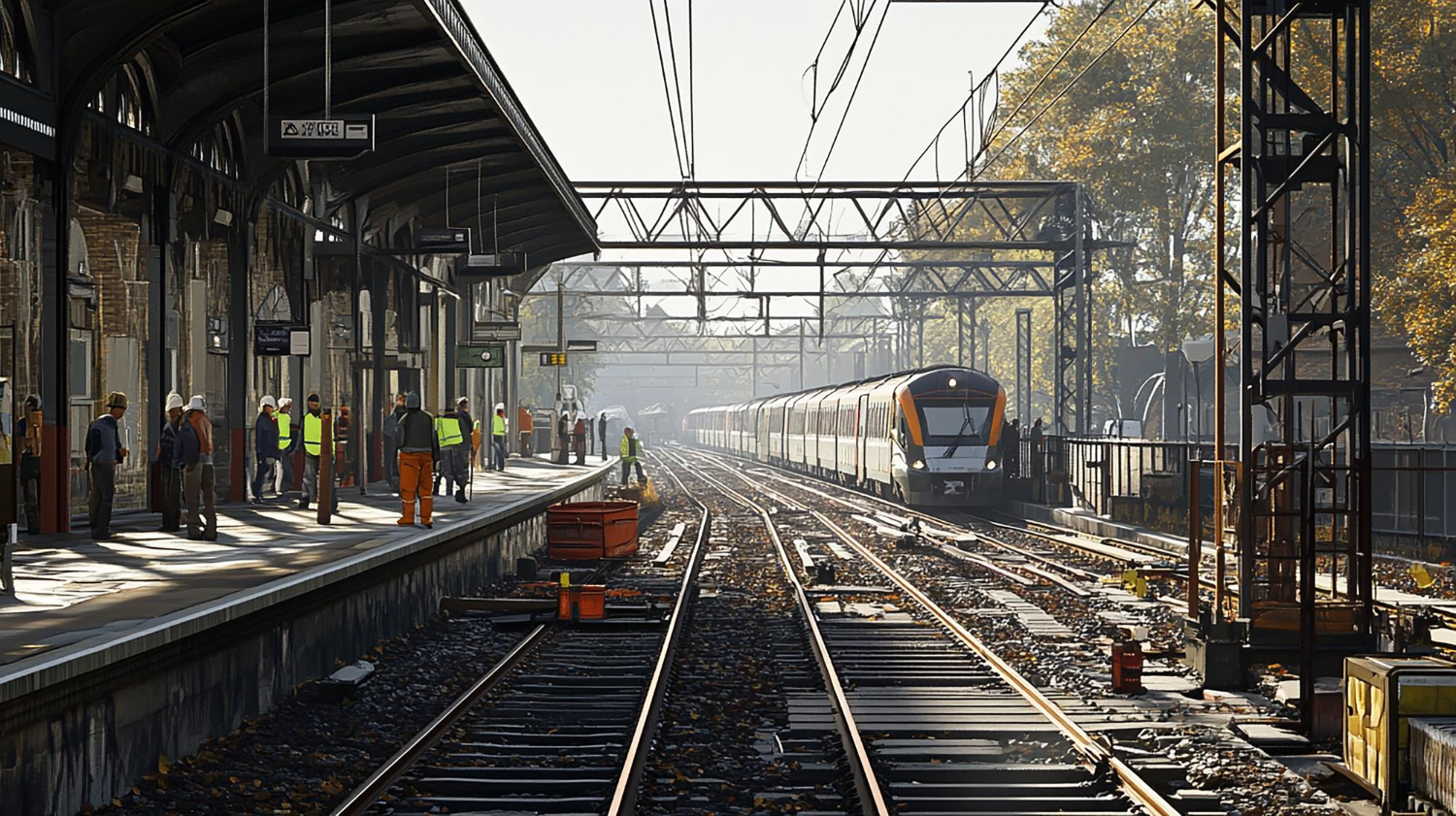
Working a few metres from a live track with trains passing through changes everything about how a site operates. Energised overhead lines, moving trains, and constant railway staff movement mean the safety planning here is far stricter than on a standard construction site.
Every activity near the running lines needs a permit, a safety briefing, and coordination with the railway’s own safety and traffic control teams. A mistake near a live line isn’t a minor incident, it can stop rail traffic entirely or worse. So teams move carefully, double check clearances, and accept that some tasks simply take longer because they have to be done right the first time.
4. Getting the sequence right is the real skill
On a new site you build in a fairly logical order, foundation, structure, finishing. On a live station, you can’t. Parts of the old structure have to stay functional while new sections go up around or beside them, so the sequence gets built around keeping the station usable, not around what’s fastest to construct.
That usually means temporary platforms, diversion walkways, and interim structures that exist purely to keep passengers moving while the permanent work happens somewhere nearby. Get the sequencing wrong and it doesn’t just delay one activity, it pushes back everything that depends on it. Good site engineers spend as much time planning the order of work as they do planning the work itself.
5. Passengers still expect the station to just work
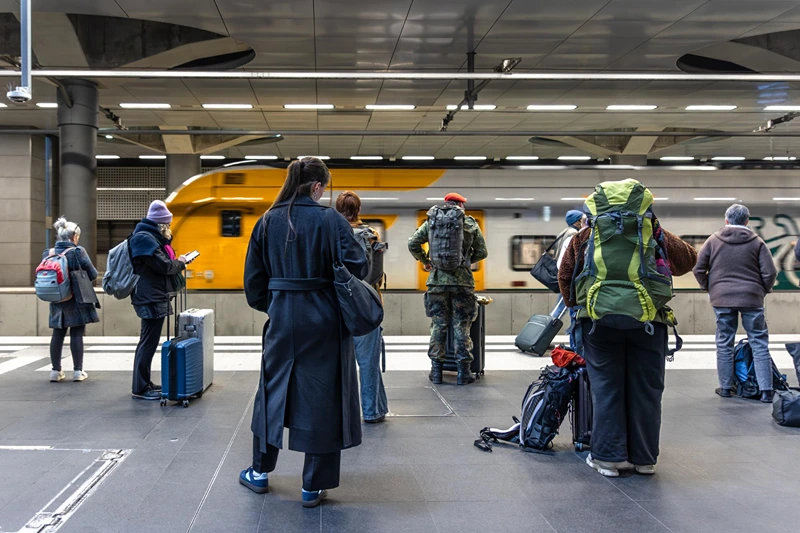
Commuters just want to have the right to use a station. They will not give you the pleasure of knowing that a redevelopment project is going on but will want to have the things they want to make their journeys comfortable like signage, dry walkways working lights etc and the train to which your journey is related should not only be on time but also the time table is not to be changed at the last minute.
A Construction Site by Its Nature Makes a Lot of Noise and Dust. On a Live Station the Noise and Dust Are Happening Right Next to Daily Commuters instead of Behind a Boundary Wall.
Walkways and Stairways of Temporary Nature should have Adequate GuardRails and Lighting. Signage needs constant update as the works progress because the boundaries between the working areas and the other areas change. People may find it quite irritating if they stumble upon something they had to use regularly like an exit that is blocked, if the way-finding is difficult, the result will be complaints or being featured on local media.
That’s why Project Teams end up having to Deal with Two Sides: Construction and the Daily Passenger Service and Neither One gets a Moment’s Rest.
6. Coordination is the actual bottleneck, not labour
Sometimes, the biggest constraint on a project seems to be the availability of workforce or materials. Nevertheless, the real difficulty is in the cooperation between various departments. The redevelopment of a train station involves the railway’s civil, electrical, and signifying departments, the local city council, the utility providers, contractors, and sometimes several companies working in neighboring districts
A single delay in obtaining a clearance, signal department’s approval, or a power cut request disrupts the whole plan. Experience plays a bigger role here than the number of crew members. Teams that have been through this before know which permits will take longer to obtain, which departments should be informed early, and the ways to keep the whole chain in motion rather than waiting for it.
Final Thoughts
Brownfield station work will not be as simple as just putting up something in an uncovered field. It takes time, thorough work, and a team that is capable of facing problems that occur on a site and not being in line with the drawings. Success in these types of projects relies mostly on experience, teamwork, and disciplined execution, rather than the size.
Giriraj Civil Developers Limited, a Mumbai-based civil works company specialising in railway and civil infrastructure, has been handling construction of railway stations including ROB, FOB, car sheds and railway yards, earthworks, track laying, and railway bridges.
Our teams are experienced in working on live, operational sites, managing complex sequencing, safety compliance, and multi-stakeholder coordination without compromising on quality or timelines. This combination of technical expertise and on-ground experience is what allows us to work as a dependable railway station construction contractor, delivering brownfield redevelopment projects that meet both engineering standards and passenger expectations.