

 GIRIRAJ CIVIL DEVELOPERS LTD NSE
-
By @GirirajCivilDev
-
July 9, 2026
- 0 Comment
ROB vs. FOB vs. Underpass: How Indian Cities Should Decide What to Build Where
Drive through any Indian city and you’ll hit some version of the same problem. A railway line or a busy road cuts a neighbourhood in half, and people need to get from one side to the other without dying trying. The fix is usually one of three things. A road over bridge, a foot over bridge, or an underpass.
On paper these all solve the same issue. In practice, picking the wrong one wastes money, creates traffic jams that last for years, or just doesn’t get used because people find it easier to jaywalk across live tracks. And that last part happens more than anyone likes to admit.
So how should a city actually decide? Not in theory, but with the stuff that actually matters on the ground. Let’s get into it.
What Each One Actually Solves
It helps to be clear about what these three structures are even for, because a lot of planning mistakes come from mixing them up.
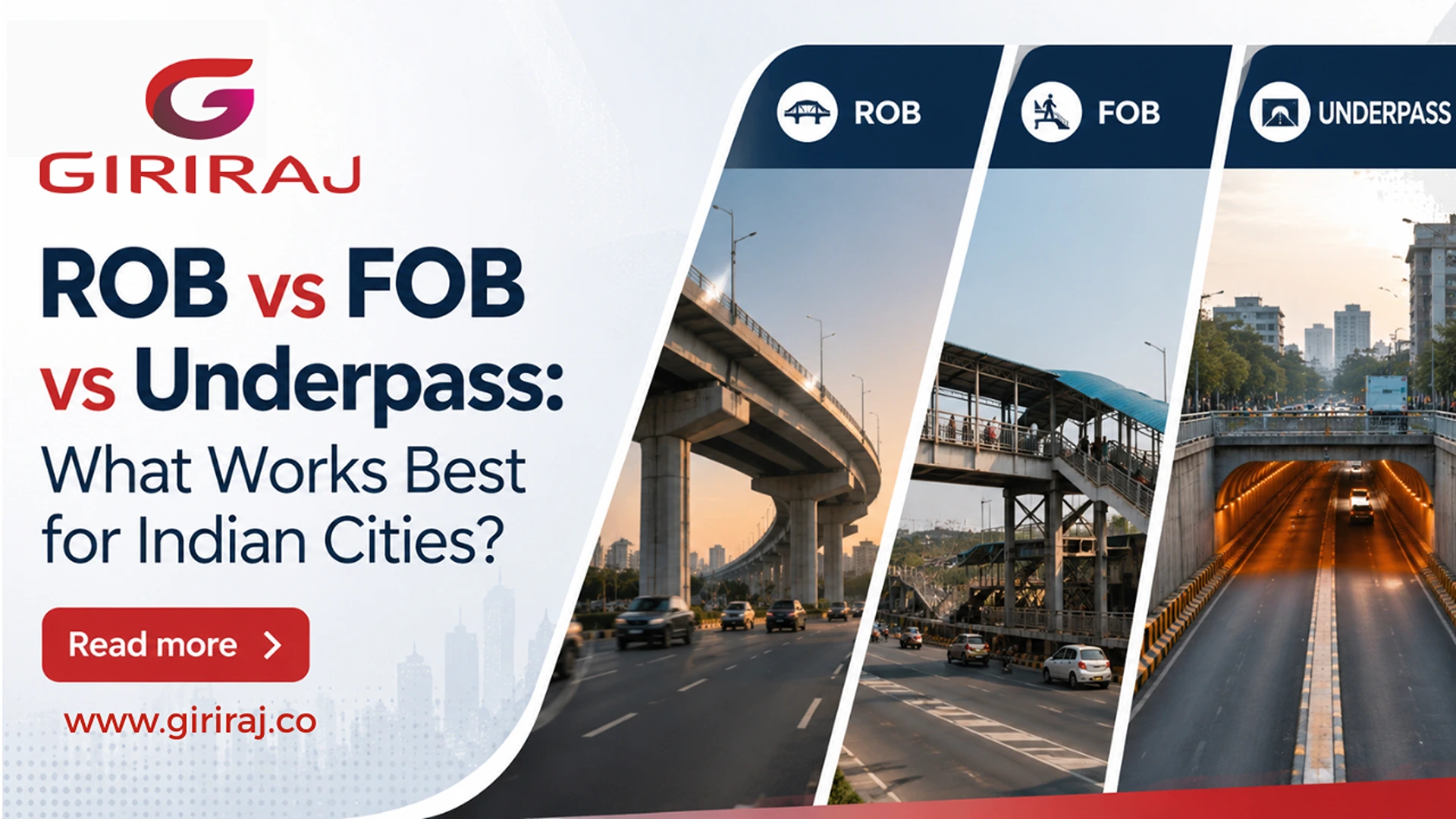
- Road Over Bridge (ROB): built for vehicles to cross over a railway line or busy junction without waiting at a level crossing.
- Foot Over Bridge (FOB): built for pedestrians, mostly at railway stations or spots where people need to cross tracks or wide roads on foot.
- Underpass: goes below the obstruction instead of over it, and can be built for vehicles, pedestrians, or both depending on the design.
Simple enough. The trouble starts when a city picks based on habit or budget instead of actually looking at who is crossing and why.
Traffic Volume Is the First Real Filter
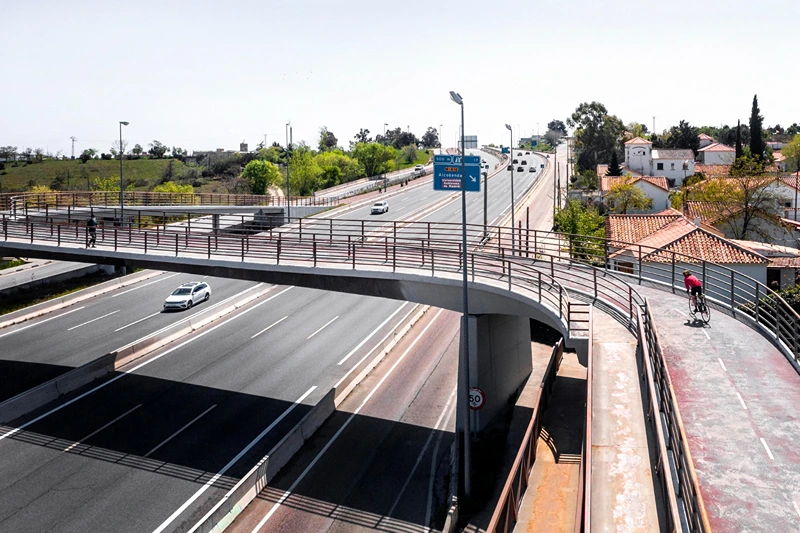
If a level crossing is holding up hundreds of vehicles every hour, especially trucks and buses, a ROB is usually the answer. Vehicles need width, gradient, and enough load capacity, and that’s exactly what a ROB is designed to give them.
But if the crossing point is mostly foot traffic, say near a station exit or a market, throwing a giant vehicular bridge at it is overkill. That’s an FOB problem. You want something people can climb quickly, ideally with escalators or lifts if there’s any real footfall, and you don’t need six lanes of concrete to do it.
A lot of Indian cities get this backwards. There are ROBs sitting half empty because the actual demand was pedestrian, and FOBs so cramped that people would rather cross the tracks directly, which is exactly what you don’t want.
Land and Space Constraints Decide More Than People Think
This is where underpasses usually come into the conversation, and honestly, in dense urban pockets they often make more sense than anything built upward.
A ROB needs long approach ramps to gain height gradually, especially for heavy vehicles. In a packed city area, that means acquiring land on both sides just for the ramp, which can be more expensive and more disruptive than the bridge structure itself. An underpass avoids that problem because it goes down instead of out. No long ramps eating into shop fronts or residential plots.
The catch is drainage. Underpasses flood. Mumbai residents know this better than anyone, and it’s the single biggest reason underpasses get a bad reputation in monsoon-heavy cities. If a city doesn’t invest properly in pumping systems and stormwater drainage, an underpass turns into a swimming pool every July.
Cost Isn't Just Construction, It's Maintenance Too
Everyone looks at the sticker price of the structure and stops there. That’s a mistake. A ROB is expensive to build but relatively low maintenance once it’s up, mostly routine structural checks and resurfacing. An FOB is the cheapest of the three by a wide margin, which is part of why it gets overused even in situations that actually call for something bigger.
Underpasses look cheaper on paper in tight urban plots because there’s no land acquisition for ramps, but the ongoing cost of pumps, drainage upkeep, lighting, and ventilation adds up fast over the years. A city that picks an underpass purely because it looks cheaper today is often signing up for a bigger bill later.
Safety and Actual Usage Patterns
This is the part planners underestimate the most. A structure only works if people actually use it instead of finding a shortcut around it. And in India, people will absolutely find a shortcut.
An FOB that’s too far from where people actually want to cross, or one without covered access and enough lighting, gets skipped. People will hop the platform edge or cross live tracks instead, and that’s how accidents happen near railway stations across the country. The fix isn’t always a fancier structure. Sometimes it’s just placing the FOB where the actual foot traffic is, not where it’s convenient to build.
Underpasses have their own safety questions at night. Poor lighting and low visibility make them feel unsafe, especially for women commuting alone, and that perception alone can kill usage even if the structure itself is fine.
So What Should Cities Actually Do
There isn’t a single right answer, and anyone who tells you there is hasn’t actually worked on one of these projects. But there is a reasonable order of questions to ask before finalising anything.
- What’s actually crossing here, vehicles, pedestrians, or both, and in what proportion?
- How much space exists for ramps, and what would land acquisition actually cost and disrupt?
- What’s the drainage situation, and can the city genuinely commit to maintaining pumps for the next twenty years?
- Where do people actually walk right now, not where the plan assumes they’ll walk?
- What’s the total cost over the life of the structure, not just the year it’s built?
Get those answers honestly, and the choice between ROB, FOB, and underpass usually becomes obvious. The problem in most Indian cities isn’t a lack of engineering knowledge. It’s that these decisions get made in a hurry, often based on what’s fastest to sanction rather than what actually fits the location.

Final Thoughts
None of these three options is better than the others in some universal sense. A ROB in the wrong spot is as useless as an underpass that floods every monsoon or an FOB nobody climbs. The cities that get this right are the ones that actually study how people move before picking a structure, instead of picking the structure first and hoping people adjust.
Get the assessment right, and whatever gets built, whether it’s steel overhead or concrete underground, actually earns its place in the city instead of just standing there as another half-used piece of infrastructure.
About Giriraj Civil Developers Limited
Giriraj Civil Developers Limited is a trusted name in India’s infrastructure sector, delivering excellence in railway and civil construction through innovation, quality, and safety. As a railway station construction contractor with projects across the country, our services include road over bridge (ROB), foot over bridge (FOB), earthworks, car sheds, railway yards, and track work. Headquartered in Mumbai, we’re known as one of the top construction companies in Mumbai, bringing deep technical expertise and a committed workforce to every project we undertake.