

 GIRIRAJ CIVIL DEVELOPERS LTD NSE
-
By @GirirajCivilDev
-
July 6, 2026
- 0 Comment
Track-Laying in Extreme Weather: Materials and Methods That Hold Up Through the Monsoon
If you’ve ever stood on a half-laid track section in July, watching the sky go the colour of wet cement, you know the feeling. Everything that looked fine in the dry season suddenly becomes a question mark. Will the ballast hold? Will the sleepers shift? Will the formation wash out overnight and set the whole schedule back three weeks?
Monsoon isn’t a footnote in Indian railway construction. It’s practically a second client, one that never signs a contract but decides how good your work really is. Anyone who has laid track through a wet season in Konkan, the Northeast, or coastal Odisha will tell you the same thing: the materials and methods that work fine on paper often fall apart the first time the ground turns to soup.
So what actually holds up? Not in theory, but on real sites, with real crews, under real rain. Let’s get into it.
A quick note on where this is coming from. We’re a civil works contractor that’s been laying track, building road over bridges (ROB), foot over bridges (FOB), and running earthworks across monsoon-heavy corridors for years, so most of what’s below comes from things we’ve actually had to fix, not just read about.
Why Monsoon Breaks Bad Track Work Faster Than Anything Else
Heat, cold, even minor seismic movement, track can usually shrug those off if it’s built right. Water is different. It gets into everything. It softens the formation, it lifts ballast, it corrodes fittings you thought were sealed, and it does all of this quietly, over weeks, until one day a section that looked stable starts to sink.
The real damage from monsoon rarely shows up during the storm itself. It shows up two months later, when a train passes over a section that was never properly drained and the track geometry has drifted just enough to matter. Getting ahead of that means thinking about water before you think about anything else.
Ballast That Actually Drains, Not Just Looks Clean
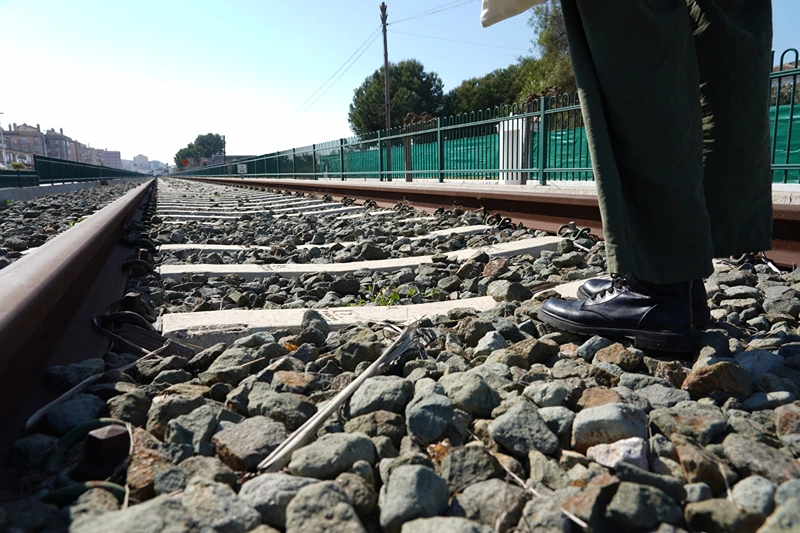
Standard practice calls for hard, angular stone ballast with good void ratio, and that’s still correct. What changes in monsoon-heavy zones is how strict you have to be about gradation and cleanliness. Ballast that’s even slightly contaminated with fines starts behaving like clay once it’s wet. It stops draining and starts holding water against the sleepers, which is exactly what you don’t want.
On our sites, we’ve found it worth the extra time to screen ballast more aggressively before monsoon-season laying, and to keep stockpiles covered rather than left open to rain. It sounds like a small operational detail. It isn’t. A contaminated stockpile can undo weeks of good formation work in a single wet spell.
Sleepers: Concrete Still Wins, But Placement Matters More Than the Material
Concrete sleepers remain the standard for a reason. They’re heavier, more dimensionally stable, and don’t rot or corrode the way older timber or unprotected steel sleepers can. But even good concrete sleepers will settle unevenly if the formation underneath isn’t compacted properly before the wet season hits.
The mistake we see most often isn’t a material choice. It’s timing. Crews lay sleepers on a formation that looks dry and firm in April, and by August, after a few heavy spells, differential settlement shows up because the sub-grade was never tested for how it behaves saturated, only how it behaves dry.
Fastening Systems Built for Movement, Not Just Strength
Rail expands and contracts with temperature, and in high-rainfall zones you also get repeated wet-dry cycles that stress fastenings in ways drier regions don’t. Elastic fastening systems, the kind that allow slight, controlled movement rather than fighting it, tend to hold up better over a full monsoon cycle than rigid clip systems that were never designed for that kind of repeated flex.
Corrosion resistance matters just as much as elasticity here. Fittings that aren’t properly galvanised or coated start showing rust within a single season in coastal or high-humidity stretches, and rusted fastenings are one of the first things that fail quietly, long before anyone notices from a passing train.
Drainage Comes First, Always
This is the one point every experienced railroad engineer will repeat until it sounds obvious. Cross drains, side drains, catch water drains along cuttings, none of it is optional in monsoon-prone corridors, and none of it can be an afterthought added once the track is already down.
- Side drains need to be sized for the worst rainfall event on record for that stretch, not the average
- Cross drainage structures should be checked and cleared before the season starts, not after the first flood
- Formation slopes need enough gradient to shed water quickly, even where that means more earthworks upfront
Get the drainage wrong and no amount of good ballast or good sleepers will save the track. Get it right and you buy yourself a lot of margin for everything else.
Timing the Work Around the Weather Window, Not the Calendar
There’s a temptation to keep pushing track-laying targets regardless of season, especially when a project is already behind. It rarely pays off. Laying track into saturated formation just to hit a monthly number usually means redoing sections of that same work once the rain settles.
The contractors who handle this well tend to build monsoon buffer into the schedule from day one rather than treating it as a delay to be explained later. Front-load formation and drainage work into the dry months, and leave the wet season for supervision, maintenance, and lower-risk activity rather than fresh track-laying wherever that’s possible.

What's Actually Changing on Sites Right Now
A few shifts are becoming standard on the better-run projects. Geotextile layers are being used more often under ballast in high-rainfall zones, mainly to stop fines from migrating up into the ballast bed. Real-time moisture monitoring on formation, once something only research projects bothered with, is showing up on commercial sites too, giving engineers actual data instead of a guess about when ground is safe to load.
None of this is glamorous work. It’s culverts, compaction tests, and drainage gradients, not the kind of thing that photographs well for a project brochure. But it’s the difference between track that holds through ten monsoons and track that needs rework after two.
Final Thoughts
Track-laying in monsoon country isn’t really about finding one clever material that solves the problem. It’s about respecting water at every single stage, from the ballast source to the drainage design to the week you choose to pour. The teams that get this right aren’t doing anything mysterious. They’re just not skipping steps when the deadline gets tight.
Whether it’s a freight corridor cutting through the Western Ghats or a suburban line in coastal Maharashtra, the ground doesn’t care about your schedule. Build for the water, and the track takes care of itself.
And if you’re a railroad engineer reading this before your own monsoon season starts, the short version is: check your drainage twice, trust your ballast source once, and never assume a formation that was dry in April will behave the same way in July.
About Giriraj Civil Developers Limited
Giriraj Civil Developers Limited is one of the top construction companies in Mumbai and a trusted civil works contractor in India’s infrastructure sector, delivering excellence in railway and civil construction through innovation, quality, and safety. We work as a railway station construction contractor and handle road over bridge (ROB), foot over bridge (FOB), earthworks, car sheds, railway yards, and track work. Headquartered in Mumbai, we bring deep technical expertise and a committed workforce to every project we undertake.