

 GIRIRAJ CIVIL DEVELOPERS LTD NSE
-
By @GirirajCivilDev
-
June 20, 2026
- 0 Comment
Iconic Bridges Worldwide: Designs Inspiring India’s Highway Expansions
India is building. And building fast. If you’ve been tracking the news around highway expansion, you’ve probably noticed the sheer scale of bridge projects that have come up in the last decade. But here’s something that doesn’t get talked about enough: a lot of what’s shaping these structures today is quietly borrowed from iconic bridges built around the world.
Engineers and planners don’t reinvent the wheel. They look at what worked, what lasted, and what solved hard problems. And across continents, there are bridges that have done exactly that.
Let’s walk through some of the world’s most iconic bridge designs and understand why they matter for what India is building right now.
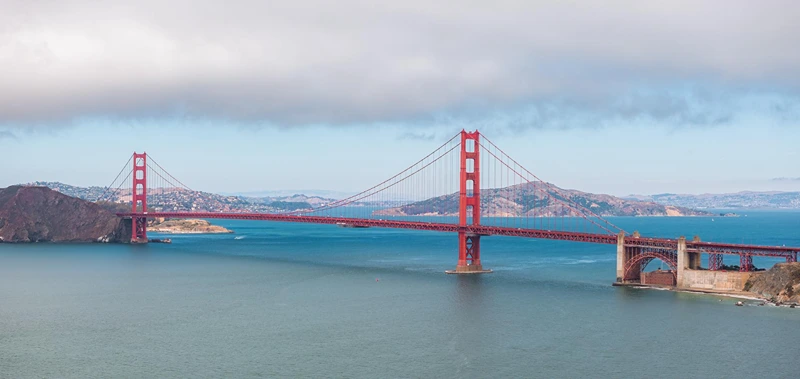
1. Golden Gate Bridge, USA: Long-Span Suspension Done Right
Built in 1937, the Golden Gate is still one of the most studied bridges in civil engineering. The suspension design, twin towers, and how it handles wind load, it set a standard that holds up today.
India’s long-span projects, especially over wide river valleys and coastal stretches, have drawn from the same suspension principles. The Bandra-Worli Sea Link in Mumbai is probably the most obvious example. Similar tower design, cable arrangement, and deck flexibility thinking all trace back to the evolution that started with bridges like the Golden Gate. And it’s not just the big spans. Even a road over bridge (ROB) cutting across a busy rail junction borrows from this load distribution thinking.
What’s worth noting is the seismic consideration built into it. California is earthquake-prone. So are several Indian states. That intersection of design thinking is very relevant now.
2. Millau Viaduct, France: Building Above the Clouds
The Millau Viaduct in southern France is taller than the Eiffel Tower at its highest point. It carries the A75 motorway over the Tarn River gorge and it did something nobody had really pulled off at that scale before: it made tall cable-stayed construction work in difficult terrain without compromising speed or safety.
India has deep gorge territory too. The Northeast, parts of Uttarakhand, Himachal Pradesh. These aren’t flat river crossings. They’re complicated, high-altitude problems. Projects like the Chenab Rail Bridge and the Anji Khad Bridge are working through exactly those challenges, and Millau’s design playbook is part of what informed those structural approaches. Every railroad engineer working on mountain terrain today is essentially solving a version of the same problem Millau solved in 2004.
Cable-stayed construction also happens to be faster to execute than traditional arch or suspension builds in certain terrain conditions. That matters a lot when you’re racing against monsoon windows and difficult access routes.
3. Akashi Kaikyo Bridge, Japan: Engineering Against Nature
Japan built the world’s longest suspension bridge over one of the most seismically active stretches of water on earth. The Akashi Kaikyo Bridge in Kobe has survived earthquakes post-construction and was designed to handle winds over 80 metres per second.
That’s not just impressive. It’s a reference point for India’s coastal infrastructure, especially as climate events become more unpredictable. Gujarat’s coastal highway expansions, the Rameswaram bridge upgrades, the planned projects along the Konkan coast, these all need to account for cyclone-level winds and salt-air corrosion over decades.
The Japanese approach of aerodynamic deck design and deep-pile foundations in soft seabed conditions has directly influenced how Indian engineers are approaching coastal bridge specifications today.
4. Tsing Ma Bridge, Hong Kong: Handling Wind and Traffic Together
Hong Kong’s Tsing Ma Bridge is a dual-purpose structure. The upper deck carries road traffic. The lower enclosed deck carries rail. Both run through one of the windiest maritime corridors in Asia.
India is increasingly thinking about multi-modal infrastructure. The idea that a bridge should carry both road and rail, or road and metro, rather than building two separate structures is picking up. It’s more economical, reduces land acquisition headaches, and makes long-term maintenance more practical. The same thinking is showing up at a smaller scale too. Railway station construction contractors are now being asked to integrate foot over bridges (FOBs) directly into station design rather than treating them as afterthoughts.
The Tsing Ma model is a template for what’s being discussed in several corridor projects, particularly where high-speed rail and national highways run parallel. Why build twice when you can build smart once?
5. Bosphorus Bridge, Turkey: Connecting Two Worlds, Literally
Istanbul’s first Bosphorus Bridge, built in 1973, connected the European and Asian sides of the city. Simple idea. Massive execution. It became the blueprint for urban suspension bridge planning in high-density environments.
India has several similar problems. Connecting islands to mainlands, bridging rivers through crowded city zones, reducing the urban ferry and boat dependency that still exists in places like Assam, West Bengal, and Kerala.
The Bosphorus approach, which prioritised minimal disruption to existing water traffic while maintaining large clearance heights, is directly applicable to bridge projects over the Brahmaputra, Ganga, and the backwaters of Kerala. Clearance design, anchor placement, and urban integration from that bridge are all reference points.
6. Oresund Bridge, Denmark-Sweden: Road Meets Rail
The Oresund Bridge does something very specific: it transitions from a bridge to an underwater tunnel mid-crossing. That’s partly to avoid disrupting flight paths into Copenhagen. It’s a creative solution to a real constraint.
India is starting to think in those terms too. Not every crossing can be purely above water. In urban zones, near airports, in ecologically sensitive regions, hybrid bridge-tunnel combinations are being explored. NHAI and state highway agencies are already looking at this for specific metro crossings.
The Oresund also carries both road and rail, which brings us back to the multi-modal thinking. What makes it a great reference point is that it actually worked at scale, not just as a concept.
What India is Taking Away From All This
India’s highway expansion plan under Bharatmala and related programmes involves thousands of kilometres of new roads, and a significant chunk of that involves bridges, viaducts, and crossings of all kinds. Engineers working on these projects aren’t starting from scratch. Neither are the civil works contractors handling the earthworks, grading, and foundation prep that makes these structures possible in the first place. Some of the top construction companies in Mumbai and other metros are already working on projects that reflect these global design influences.
Here’s what’s genuinely being absorbed from global bridge design:
- Cable-stayed construction for faster execution in difficult terrain
- Aerodynamic deck profiles for coastal and high-altitude bridges
- Multi-modal decks that carry both road and rail on one structure
- Seismic-resistant foundation systems in earthquake-prone zones
- High-clearance suspension designs for river crossings with heavy barge traffic
- Hybrid bridge-tunnel approaches near airports and ecological zones
The specifics get adapted. Materials are localised. Cost constraints are real. But the structural DNA is there, borrowed and improved upon.
Final Thoughts
The world’s most iconic bridges aren’t just tourist attractions. They’re engineering answers to hard problems, and those answers travel. When you see a long-span bridge going up over a river gorge in Arunachal Pradesh or a sea link being designed off the Gujarat coast, somewhere in the engineering decisions is a lesson learned from Kobe, Paris, or Copenhagen.
India is not just copying. It’s taking what works and making it fit here. That’s how infrastructure grows intelligently.
Looking for a reliable civil construction company in India? Your search ends here. GIRIRAJ CIVIL DEVELOPERS LIMITED (GIRIRAJ) is ready to turn your vision into reality with quality, commitment, and expertise.
Whether it’s a highway bridge, a railway overpass, or a large-scale civil infrastructure project, GIRIRAJ is here to deliver excellence. Get in touch today and take the first step towards a strong and successful construction project!