

 GIRIRAJ CIVIL DEVELOPERS LTD NSE
-
By @GirirajCivilDev
-
April 22, 2026
- 0 Comment
The Hidden Complexity Behind Building a Simple Bridge
It Looks Simple. It Really Isn't.
You’re driving over a bridge every other day. You don’t think about it. Nobody does. You just cross it and move on. But the people who actually build that bridge? They’ve spent months, sometimes years, worrying about things most of us would never imagine.
That’s the thing about civil works. The finished product looks clean, obvious, almost inevitable. Like it was always meant to be there. What you don’t see is the engineering headache behind every single metre of it.
Whether it’s a road over bridge (ROB) cutting across a railway line, or a foot over bridge (FOB) connecting two sides of a busy station, the complexity underneath is real. Let’s talk about it.
First, What Exactly Is a Road Over Bridge?
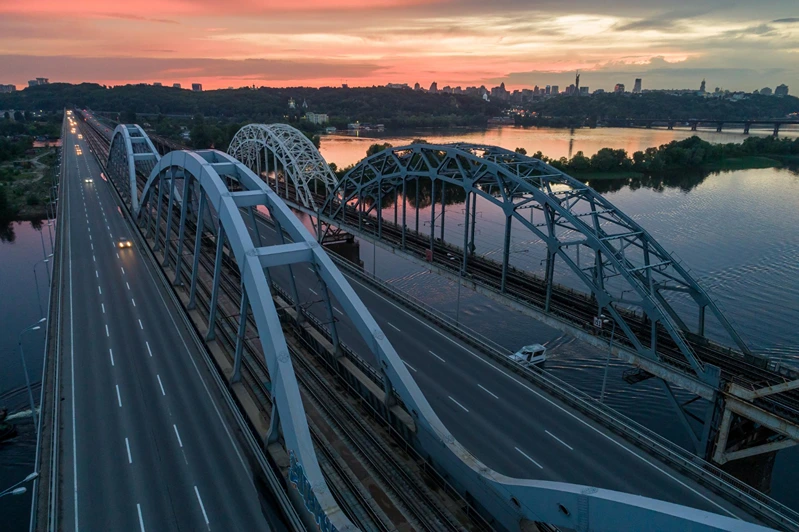
A road over bridge (ROB) is exactly what it sounds like. A road built over a railway track or another road, so the two never physically cross at the same level. No gates, no waiting, no accidents.
In cities like Mumbai, where railway lines cut through residential and commercial zones like veins through a body, ROBs are everywhere. They’re what keeps traffic moving. They’re what stops the city from grinding to a halt every time a train passes.
But building one isn’t just pouring concrete and calling it a day. A railroad engineer will tell you there are a dozen things that can go wrong before the first beam even goes up.
The Ground Beneath Your Feet
Before anything goes vertical, you go deep. Literally.
Earthworks are the foundation of every bridge project, and they’re also where things get complicated fast. The soil survey alone can take weeks. Is the ground stable? How far down is bedrock? Is there groundwater? Old drainage lines nobody documented?
In Mumbai, you’re often dealing with reclaimed land, coastal soil, or ground that’s been built over so many times nobody really knows what’s down there anymore. A good civil works contractor doesn’t just dig and hope. They test, they assess, they plan for every kind of soil condition they might encounter.
One bad call on the earthworks, and you’re looking at foundation failure down the line. That’s not a cost issue. That’s a safety issue.
The Railway Constraint Nobody Tells You About
Here’s the part that trips up even experienced contractors. When you’re building a road over bridge across an active railway line, the trains don’t stop for you.
They keep running. Every day. Every hour. Sometimes every few minutes.
So your construction window is tiny. You get a traffic block, which basically means a scheduled period when the railway authority gives you a short window, sometimes just a few hours in the dead of night, to do your most critical structural work above the tracks.
Miss that window? You wait for the next one. Fall behind schedule? Your whole project timeline shifts. The pressure a railway station construction contractor works under during these phases is intense in a way that’s hard to explain to someone who hasn’t been on site at 2 AM watching a crane swing a girder into position with maybe 90 minutes left before the first morning train.
This is why experience matters so much in this sector. You need people who’ve done this before, who know the protocols, who’ve coordinated with railway officials and know exactly what to do when something doesn’t go to plan.
Foot Over Bridges Are a Different Beast
People sometimes assume a foot over bridge (FOB) is simpler than a vehicular bridge. Smaller, lighter, fewer lanes. Less work, right?
Not really.
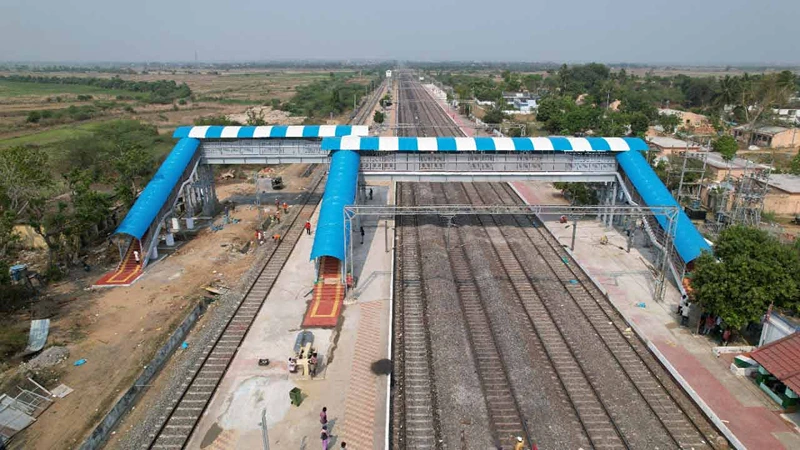
An FOB at a busy railway station carries enormous passenger load. Design capacity is one thing. Real-world peak-hour usage is another. Think of what happens during rush hour at Dadar or Andheri station. Hundreds of people moving in both directions at once. The structure has to handle not just the static weight but the dynamic load of all that movement.
Accessibility is another layer. Ramps for differently abled passengers, proper staircase widths, anti-slip surfaces, adequate lighting. These aren’t optional extras. They’re requirements, and getting them right during design saves a world of trouble during inspection.
And then there’s the integration with the station itself. An FOB doesn’t just float in space. It connects platforms, exits, roads, sometimes bus depots. Every connection point has its own set of structural and logistical challenges.
Why Mumbai Is Particularly Challenging
If you’re among the top construction companies in Mumbai, you’ve probably earned that position by surviving projects that would give other contractors pause.
Mumbai is dense. There’s almost no project site that isn’t surrounded by existing buildings, utility lines, roads, and of course railway infrastructure. Space is tight. Access is restricted. The regulatory environment has multiple stakeholders, from municipal corporations to railways to traffic police.
Add to that the monsoon season. You have roughly four months every year where heavy rain can shut down excavation work, delay concrete pours, and generally make site management miserable. Project planning in Mumbai has to account for this. If it doesn’t, you’re already behind before you start.
A railroad engineer who has worked exclusively in open, rural terrain would find Mumbai’s constraints genuinely difficult. Urban railway construction is its own specialty.
What Makes a Good Infrastructure Partner?
Clients ask this question a lot. Especially government bodies and railway authorities who are overseeing projects worth crores.
The honest answer is this: technical competence is the baseline. Every serious bidder has engineers, equipment, and certification. What separates the good ones from the rest is site management, coordination, and the ability to deal with the unexpected.
Because something always comes up. Unexpected rock formations during earthworks. A design change from the client mid-project. A delay in material delivery that cascades through the timeline. The contractor who handles these calmly, communicates clearly, and finds solutions without drama, that’s who you want on a critical bridge project.
Experience in railway construction specifically matters. The protocols, the safety norms, the coordination with railway officials, these are things you learn over time. There’s no shortcut.

The Bigger Picture
Every ROB built across a railway crossing eliminates a level crossing. Level crossings are one of the leading causes of railway accidents in India. So each bridge isn’t just a piece of infrastructure. It’s a safety intervention.
Every FOB at a crowded station reduces the chaos on platforms. It literally gives people room to breathe. And in a country where public transport moves millions of people every single day, that matters more than it might seem on paper.
The work civil contractors do, quietly, without much public recognition, is foundational to how the country functions. The trains run on time partly because the infrastructure around them was built right.
Final Thoughts
Next time you drive over a bridge or walk across a station FOB, maybe take a second to think about what went into it. The soil surveys, the nighttime construction windows, the monsoon delays, the coordination with railway officials, the load calculations, all of it happening so that you can just cross and move on without thinking.
That invisibility, that seamlessness, is actually the goal. It means the job was done right.
At Giriraj Civil Developers Limited, that’s what we build for. Whether it’s a road over bridge, a foot over bridge, complex earthworks, or full railway station construction, we bring the kind of experience that makes hard projects look straightforward. Because that’s what good infrastructure is supposed to do.