

 GIRIRAJ CIVIL DEVELOPERS LTD NSE

-
By @GirirajCivilDev
-
April 16, 2026
- 0 Comment
How Global Events Are Quietly Shaping India’s Infrastructure Projects
There’s a lot happening in the world right now. Supply chain disruptions, shifting trade alliances, rising material costs, geopolitical tensions. Most people read about these things in the news and move on. But if you’re in infrastructure, you feel every one of these shifts on the ground.
India’s infrastructure sector, particularly railway and civil construction, doesn’t operate in a bubble. What happens in Ukraine, what the US Fed decides overnight, what climate conferences agree upon in Geneva, all of it quietly trickles down to how projects get planned, funded, and executed right here in Mumbai, Delhi, or a remote railway corridor in Odisha.
Let’s talk about how that actually plays out.
Steel Prices and the ROB/FOB Reality
Anyone who has worked on a Road Over Bridge (ROB) or Foot Over Bridge (FOB) project in the last three years will tell you the same thing: budgeting has become a completely different exercise.
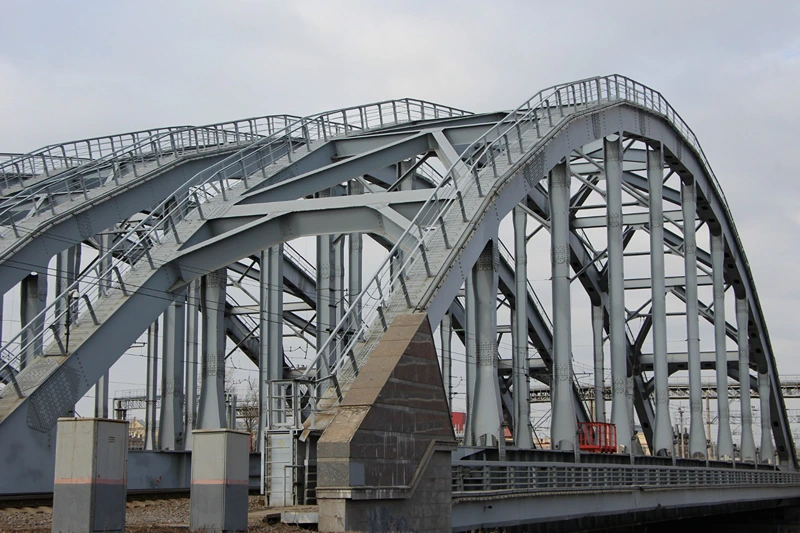
When Russia invaded Ukraine in 2022, global steel prices shot up almost overnight. India imports a significant portion of its raw construction materials, and that spike hit infrastructure projects hard. ROB top construction, which is heavily steel-dependent, saw cost overruns that nobody had factored into contracts signed just six months earlier.
The impact wasn’t just financial. Timelines stretched. Procurement strategies changed. Some of the top construction companies in Mumbai started locking in longer-term supplier agreements rather than buying spot. Others pushed toward domestically sourced alternatives wherever possible.
The good news? This actually accelerated India’s push for domestic steel manufacturing and self-reliance in construction inputs. What started as a crisis response has now become a structural shift in how civil works contractors plan their supply chains.
India's Strategic Push as Global Supply Chains Shift
Here’s something that doesn’t get talked about enough. When the US and Europe started decoupling from China, a lot of manufacturing was looking for a new home. India stepped up aggressively with its Production Linked Incentive (PLI) schemes and ‘Make in India’ campaigns.
More manufacturing means more logistics demand. More logistics demand means more pressure on rail freight capacity. And that directly translates to bigger investment in railway infrastructure across the country.
The dedicated freight corridor projects, the expansion of industrial hubs in places like Pune, Ahmedabad, and Chennai, the push for port connectivity, all of this is happening partly because global trade patterns are reshuffling and India is positioning itself to benefit.
For a railroad engineer working on the ground, this means more projects, more complexity, and more urgency. The government isn’t building because it has spare capacity. It’s building because it has to keep up.
Climate Commitments Are Changing What Gets Built
India committed at COP26 and COP28 to ambitious net-zero targets and a significant expansion of renewable energy. That sounds like a power sector story, but it bleeds directly into infrastructure.
Railway electrification has become a national priority partly because of these commitments. Indian Railways aims to become net zero by 2030, and that requires an enormous amount of civil works, from electrification infrastructure to earthworks for new green corridors.
Green building norms are starting to influence how railway station construction is planned. Stations are being designed with solar panels, rainwater harvesting, and energy-efficient systems. That’s not just good PR. It’s becoming a tender requirement in several Railway zones.
Civil works contractors who get ahead of this curve, who understand sustainable construction practices and can deliver on green compliance, are going to have a real edge going forward.
The Rise of Bilateral Infrastructure Funding
Japan has been financing metro rail projects in India for years. The Japan International Cooperation Agency (JICA) is behind a significant chunk of Mumbai’s urban rail expansion. The Asian Development Bank funds highway and transit projects across multiple states.
More recently, as India courts investment from the US, UAE, Australia, and others under frameworks like the G20 infrastructure compact, bilateral funding for infrastructure is growing. These aren’t loans to be paid back quietly. They come with conditions, timelines, and oversight.
What that means in practice is that projects funded this way tend to have tighter quality controls and more stringent documentation requirements. For a railway station construction contractor, that means more investment in compliance, reporting, and project management systems. It’s more work upfront, but it also raises the bar industry-wide, which is genuinely a good thing.

What This Means for Civil Works Contractors in Mumbai and Beyond
Mumbai is probably India’s most complex construction environment. You’re dealing with dense urban areas, sensitive local politics, monsoon constraints, and some of the highest logistical costs in the country. And yet it’s also where some of the most important infrastructure projects are concentrated.
Top construction companies in Mumbai working on ROB top construction, FOB projects, and railway civil works are having to adapt fast. The projects coming in now are bigger, more technically demanding, and tied to stricter international benchmarks than anything seen a decade ago.
A few things are becoming non-negotiable for serious civil works contractors:
- Strong earthworks execution capability, because so many new corridors involve significant ground preparation
- Technology adoption, from BIM software to drone surveying, because clients expect it
- Financial stability and access to working capital, because project scales and payment cycles have both grown
- Proven track record in safety compliance, especially for FOB and ROB work near active railway lines
The firms that have invested in these areas are the ones winning tenders right now.
The Ground Reality for Railway Station Construction
The railway station redevelopment program is one of the most visible examples of how global aspirations translate to local construction activity. India wants world-class stations. Think Gandhinagar, think the new Ayodhya station, think what’s planned for dozens of major junctions across the country.
These aren’t just cosmetic upgrades. They involve complete reconstruction in many cases, new FOB and ROB connections to surrounding areas, underground utilities, commercial spaces, and accessible infrastructure that meets modern standards.
For a railway station construction contractor, this is a period of real opportunity. But it requires a different kind of thinking than traditional railway civil works. You’re no longer just building a platform or a waiting hall. You’re delivering an integrated urban transit experience.
That requires coordination with architects, urban planners, local municipal bodies, and often, international consultants hired by the funding agencies. The railroad engineer of today needs to be as comfortable in a design review meeting as on a construction site.
Final Thoughts
India’s infrastructure boom isn’t happening in isolation. It’s deeply connected to what’s going on globally, from geopolitics to climate policy to trade economics. The contractors, engineers, and companies that understand this context are going to make better decisions, win more work, and build things that actually stand the test of time.
Whether you’re involved in ROB top construction in a busy Mumbai suburb, laying earthworks for a new freight corridor in central India, or building a FOB at a redeveloped railway station, the forces shaping your work are global in origin even if the dust on your boots is very much local.
Stay informed. Stay adaptable. The sector is growing, and it’s growing for real reasons.
About Giriraj Civil Developers Limited
Giriraj Civil Developers Limited is a trusted name in India’s infrastructure sector, delivering excellence in railway and civil construction through innovation, quality, and safety. Our services include railway station construction, road over bridge (ROB), foot over bridge (FOB), earthworks, car sheds, railway yards, and track work. Headquartered in Mumbai, we bring deep technical expertise and a committed workforce to every project we undertake.