

 GIRIRAJ CIVIL DEVELOPERS LTD NSE

-
By @GirirajCivilDev
-
June 6, 2026
- 0 Comment
Lessons from the Pyramids: Durability Hacks for Modern Mega-Projects
The Pyramids of Giza have been standing for over 4,500 years. No maintenance crew. No sensors. No project management software. Just stone, precision, and planning that most modern teams would honestly struggle to match.
That’s a real question worth sitting with: why do century-old railway bridges still carry freight today, while some newer structures show cracks within a decade? What were those ancient builders getting right?
There’s a lot here that applies to anyone working in infrastructure today. Let’s get into it.
1. They Built to Last, Not Just to Finish
Ancient builders had no handover-and-move-on culture. The people who built these structures knew they’d be judged by how long the thing stood, not how fast it went up.
Modern projects face the opposite pressure. Deadlines, budget reviews, political optics around inauguration dates. That creates a quiet temptation to cut corners on things that won’t show up as problems for years.
The good firms, the ones consistently winning large contracts, have figured out that durability and speed aren’t enemies. You invest more time upfront and the actual build moves faster because you’re not firefighting problems mid-execution. That’s true whether you’re one of the top construction companies in Mumbai working on an urban rail corridor or a smaller civil works contractor handling a standalone bridge job.
The Pyramids didn’t happen because someone rushed the first phase.
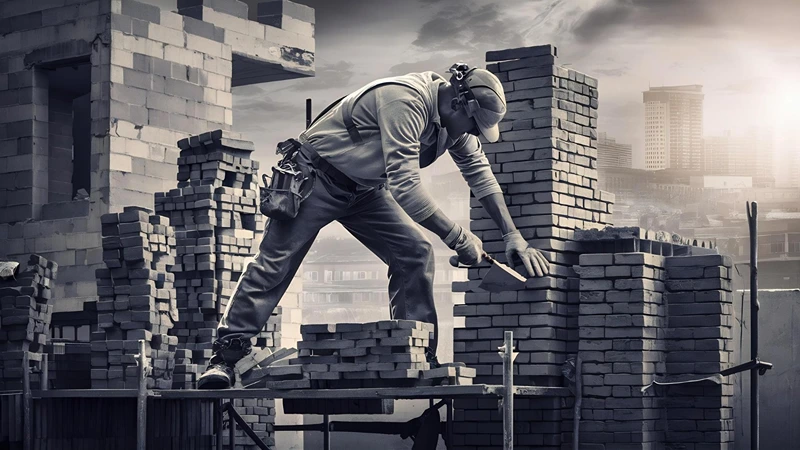
2. The Ground Always Decides
Look at any major structural failure in the last 50 years. A surprising number trace back to the same place: the foundation wasn’t right. Soil wasn’t assessed properly. The earthworks stage was compressed. Load calculations didn’t account for what actually happens on site.
Egyptian builders quarried down to solid bedrock before placing a single block. They understood that your structure is only as strong as what’s underneath it.
Nothing’s changed. Whether you’re building a railway station, a road over bridge spanning an active rail line, or doing large-scale earthworks for a freight corridor, the ground is still the thing that decides your outcome. The teams that know this don’t cut corners at the foundation stage. Ever.
3. Labour Was Their Biggest Asset
The old story was that the Pyramids were built by slaves. It was a skilled, organised workforce, well-fed, with medical support and structured rotation. The right people doing the right tasks.
Throwing bodies at a problem has never worked. It doesn’t work now either.
Think about something like a foot over bridge installation near a live railway line. Or erecting a road over bridge across an active track during a traffic block. These aren’t jobs where someone figures it out on the day. The crew needs to have done it before. A skilled 10-person team on that kind of work will outperform a disorganised 30-person crew every single time.
4. They Didn't Rush the Planning Phase
Before a block moved, the Egyptians had mapped out everything. Sight lines, ramp layouts, manpower schedules, material stockpiles. All of it worked out before construction began.
That’s pre-building engineering. In modern terms: surveys, soil testing, structural design, load analysis, approvals, utility mapping, execution sequencing. It’s the stage clients most want to skip because nothing visible is happening.
But skip it and you find problems mid-build, where solving them costs three times as much. Every experienced railroad engineer has seen this play out. The projects that run smoothly are almost always the ones where pre-building engineering was treated seriously. The ones that blow up on site are the ones where it was rushed.
The Pyramids are geometrically near-perfect. That didn’t happen by accident.
5. Materials Were Chosen for the Long Game
The limestone in the Pyramids came from quarries chosen specifically for density and weather resistance. The granite for internal chambers came from Aswan, hundreds of kilometres away. They weren’t using whatever was closest. They were using what would last.
In construction today, material selection is where value is either built or destroyed. Lower-grade concrete saves money on day one and costs significantly more by year ten. Specifying the right rebar grade for a structure carrying heavy loads isn’t a nice-to-have. It’s what determines whether that structure is safe 30 years from now.
The firms that consistently build structures outlasting their design life are disciplined about this. They specify right, procure right, and test on site before anything gets poured. Simple as that.
6. Scale Demanded Coordination, Not Just Muscle
Giza wasn’t one project. It was several running simultaneously: three pyramids, the Sphinx, temples, worker villages, a port. Shared resources, multiple workstreams, all sequenced together.
Any railway station construction contractor knows this feeling. You’re not just building the station. There’s live track coordination, utility diversions, temporary roads, adjacent civil works, and multiple subcontractors who all need to hit their windows correctly.
The gap between a competent firm and a genuinely excellent one shows up here. Coordination isn’t Gantt charts. It’s communication culture, clear accountability, and site leadership that actually understands what’s happening on the ground rather than just reporting upward.

7. What Modern Teams Can Actually Take Away
This isn’t about romanticising old methods. Modern construction is objectively better in almost every technical way.
The point is the mindset. The Pyramids endure because their builders prioritised doing things properly over doing them quickly. For anyone in infrastructure today, the practical version of that looks like:
- Don’t compress earthworks. It decides everything downstream.
- Pre-building engineering is an investment, not overhead.
- Build for 30 years out, not just the commissioning date.
- Skilled teams on complex work. Experience isn’t interchangeable.
- At scale, coordination matters as much as technical ability.
Final Thoughts
India’s infrastructure pipeline right now is genuinely massive. New railway stations going up across the country. Road over bridge and foot over bridge projects running in parallel with active operations. Freight corridors, urban transit, civil works at a scale that hasn’t happened here before.
The firms that get remembered for this era will be the ones who treated it the way the Egyptians treated Giza. Not as a deadline to hit, but as something that has to be right. That means doing the unglamorous stuff properly: the soil work, the planning, the material testing, the early-stage engineering that nobody takes photos of.
Durability isn’t a feature. It’s the whole point.
Giriraj Civil Developers Limited has been working in railway and civil infrastructure long enough to know this firsthand. If you’re looking for a team that brings that kind of rigour to every project, we’re worth talking to.